
Category Archives: Needs and Government

See Through the Things That Still Manipulate You

Created October 30, 2020

You know what I mean. You’ve already conquered many of the things that used to push your buttons. Now maybe they can still get your goat from time to time when they catch you suddenly off guard while you are dealing with something else, or when you are just totally exhausted.

When I was 9 years old I refused to learn long division. Whenever the subject came up I became uneasy and defensive. My mind shrank in its capabilities because of the negative emotional tone I became trapped in.

When I was 12 years old I refused to wear glasses. It upset me whenever I was forced to put them on.

I’m sure the things you were vulnerable to as a child were silly like mine, and you’ve put them all away as I have mine.

Yet even as adults there are things that still can disturb our mental emotional tranquility. They somehow grab us and take over our minds and emotions. We are suddenly afraid or angry or simply not having a good time all of a sudden.

The next time that happens to you, observe it as a scientist would. What was it that took away your good mood? Why did you let it? What inside of you was the traitor? What fixated attachment do you have – perhaps to some image of yourself – that made you vulnerable being taken over as it by a spell?

Politics is one thing that can do it.

Modern Internet and all the other media we have now, is another thing that can do it.

These things can get to me if I learn about something happening which I wish I could fix, and I realize the enormity of the thing, and my own relative helplessness to come to the rescue. The frustration at not being able to do enough to help is still capable of disturbing my mental emotional tranquility sometimes. At most times I can turn it off like an alarm clock by contemplating what I can do, whether it will have much of an effect or not, and then doing it, without getting hung up on what the outcome might be.

We have to be able to rise above politics. In American Pragmatic Idealism there is a pantheon of ideals we hold high, some of which are more important to the conserving side of our natures, and some of which are more important to the progressing side of our natures, but all Americans want all of these things:

REPUBLICANS

DEMOCRATS

FREEDOM

EQUALITY

INDEPENDENCE

JUSTICE

FRUGALITY

BENEVOLENCE

DEMAND WHAT YOU DESERVE

PEACE

STOICISM

SELF IMPROVEMENT


People employed in government can be expected to be above average in being motivated by Power. This is not necessarily a bad thing if it causes us to have enough people interested in governance so the rest of us don’t have to spend more time on that than we individually feel like. We each have to devote some time to governance because that’s the nature of the deal in a democracy.

But Power as we all know can corrupt. And the lust for power can cause people to become manipulative and to use today’s incredibly powerful media to force a foothold in our private mental emotional space. These messages from both sides will tend to exaggerate the dangers of letting the other side win, and will tend to push us into warring camps. This is intentional or unintentional or both, but that is irrelevant, because one way or the other, it is happening. Only we can learn to be strong enough to prevent our own mental invasion by manipulative and maddening stimuli and memes.

We have a good thing going here. First, life itself. Second, this magically beautiful and awe-inspiring planet we all love. Third, love itself. The list goes on. It includes science. It includes America, and more generally, the notion of Democracy. The governance of the Universe which evidently loves us, wanted us to have all these good things.

We have to shake off the willies and get in touch with our own gratitude for the good thing we all have here all around us. We have to keep it going, and make it better where we can, without blaming or being unkind to one another.

Superman, the comic book character launched in 1939, through his writers, coined the phrase “Truth, Beauty, and The American Way”, just in time for WWII. Those were Superman’s ideals, his motivations, even though he didn’t come from America, he came from Krypton.

Many 18-year old GIs dying on the battlefield probably held the phrase in their hearts to keep themselves fighting to the last.

Truth is mentioned first of the three Superman ideals. Who is lying more to us, and who is lying less? Even if we cynically assume they are all lying to us (which I do not), we should at least be able to make a careful judgment call, citing specific evidence to ourself, as to who is probably lying more to us and who is probably lying less to us.

It’s time for you to vote, if you haven’t already done so. Voting is not only our right it’s our duty. If we do nothing else in the social compact we made with our country, that’s the one thing we must do, at least for presidential elections. Stand up and be counted. Take responsibility. Be a leader. Be true to yourself. What do YOU stand for? To not vote is to state that you stand for nothing. Nihilism. Disrespect for life.

If you’re being prevented from voting by BS rules, it’s up to you to find the way to overcome that BS. The Universe will help you if you put out the effort, and you will vote.

Hold your heart steady. Be able to go on if whoever you vote for, the other folks win. Keep in mind the long view of America. Its checks and balances were carefully worked out and there’s a good chance no matter who is in charge of the various houses of government here, the system itself will protect us. Moreover, have confidence in the strength of the good. Not only in America but around the world. Don’t write off the billions of good people we’ve got on this planet.

The center is where we all pull together. When we don’t hold the center, things can get out of hand.

May the center hold.

Best to all, and God Bless America.

Bill

A Song for Today https://www.youtube.com/watch?v=5NqszdLiJxg


Follow my regular media blog contribution, In Terms of ROI at Media Village. Click here to read my latest post.
The American Presidents – A Contrapuntal Soliloquy

Post Date: February 14, 2019

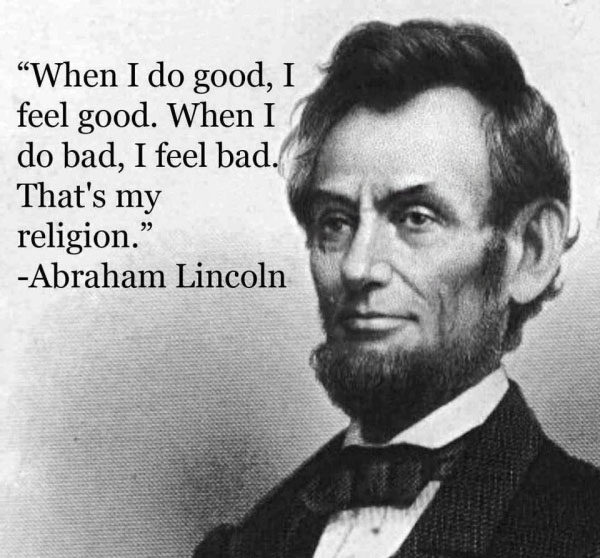
Monday, February 18, is Presidents’ Day. A day to honor our leaders, those who have assumed the executive responsibility for our democracy and our freedom. The burden for them, all of them, has been and remains enormous.

abraham-lincoln-when-I-do-good

Collectively, our Presidents have been almost as awesome as the concept of America itself. Even if we take their average, they are an extraordinarily gifted group of human beings.

Their wisdom has come down to us in their actions and in their most salient quotes. It seems fitting to reflect on some of the thoughts that they lived by.

Let’s start with the father of all Presidents.

’Tis better to be alone than to be in bad company.
     —George Washington

The guiding principles put into words by our best Presidents sound like the natural language of speaking to a beloved child. In the pre-Revolutionary period, Washington had to choose carefully with whom to align. History vindicates his choices.

This quote sums up the American Agenda:

To be good, and to do good, is all we have to do.
     —John Adams

This is also the Perennial Philosophy and the root of all religion. You see right away what I mean about this group of people.

Nothing can stop the man with the right mental attitude from achieving his goal; nothing on earth can help the man with the wrong mental attitude.
     —Thomas Jefferson

Mental focus and attitude is the core of Buddhism and my own work and a lot of other great work being done around the planet more and more each day. A lot of the innovations that roll out, start right here in America, even today, even in our time of self-doubt. The mental climate in America remains right for innovation despite any temporary inner turbulence. The mental attitude of pessimism says that every great nation declines, like a law of physics. That’s not exactly the mental attitude Thomas Jefferson was recommending to us.

If your actions inspire others to dream more, learn more, do more and become more, you are a leader.
     —John Quincy Adams

“Judge them by their fruits,” Jesus said. Truly the fruit of inspiration is an enthusiastic, hopeful populace. We are not always in that blessed state, but we have always returned to it.

It takes a slightly better man to acknowledge instantly and without reservation that he is in error.
     —Andrew Jackson

The gratitude … should be commensurate with the boundless blessings which we enjoy.
     —James K. Polk

Surely over time we have taken for granted the rare privileges we receive here in the land of the future, The Noble Experiment launched by our Founding Fathers.

I don’t like that man. I must get to know him better.
     —Abraham Lincoln

God crowned our Good with Brotherhood, as the song goes.

If you could kick the person in the pants responsible for most of your trouble, you wouldn’t sit for a month.
     —Theodore Roosevelt

The object of love is to serve, not to win.
     —Woodrow Wilson

These leaders, elected by the American system, often brought us to the highest principles of existence. 

Men are not prisoners of fate, but only prisoners of their own minds.
     —FDR

It is amazing what you can accomplish if you do not care who gets the credit.
     —Harry S. Truman

 Pessimism never won any battle.
     —Dwight D. Eisenhower

Efforts and courage are not enough without purpose and direction.
—John F. Kennedy

 You can do what you have to do, and sometimes you can do it even better than you think you can.
     —Jimmy Carter

As a beacon of freedom and opportunity, that draws the people of the world, no other country on Earth comes close.
     —Ronald Reagan (see video below)

No problem of human making is too great to be overcome by human ingenuity, human energy, and the untiring hope of the human spirit.
     —George H.W. Bush

 If you live long enough, you’ll make mistakes. But if you learn from them, you’ll be a better person. It’s how you handle adversity, not how it affects you. The main thing is never quit, never quit, never quit.
     —Bill Clinton

 Change will not come if we wait for some other person or some other time. We are the ones we’ve been waiting for. We are the change that we seek.
     —Barack Obama

 Without passion you don’t have energy, without energy you have nothing.
     —Donald Trump

You may not respect all of these people quoted. But looking at the group as a whole, I’d say it attests to the inspired design of the American system that elected these men. Improbably, the system has worked better than any other political system in history.

I encourage you to have a listen to this precious gem, Ronald Reagan’s last speech, in the video below, in which he reminds us how lucky we are to be Americans, and how the attraction of bold and courageous immigrants continuously revitalizes our nation, and validates to the rest of the world the value of our way of life.

A big round of big-hearted, inclusive, unifying applause, folks, for the 45 elected leaders that have taken us through 243 years of growing pains as a nascent Democracy. We have been miraculously blessed, and we have much to be grateful for. We know what we have. And we are each responsible for our part as engaged citizens. Each day we can strive to make it better. And guess what—we will.

Happy Valentines’ Day to Every One!

Bill

My thanks to Bob DeSena and The Human Effectiveness Team for their inspiration.

Thanks also to Psychology Today whose curation of Presidential sayings is where the quotes above come from. Here’s the link. https://www.psychologytoday.com/us/blog/better-perfect/201702/inspirational-quotes-the-45-us-presidents

I chose a different quote for Ronald Reagan, a quote from his last speech (see video above).

Read my latest post at my media blog “In Terms of ROI“ at MediaVillage.com under MediaBizBloggers.  

14 Things Everyone Needs From Government

Originally posted May 29, 2011

In The May 16, 2011 issue of The New Yorker (an especially fine issue even by that iconic publication’s standards), a Pakistani storekeeper doing business in the neighborhood where Osama had been hiding, says he doesn’t care about that particular struggle, or any other fight going on in the world. He doesn’t want weapons, he says, he wants “light, water, health and education”.

Most people everywhere would echo those words. A huge percentage of the history of the world being written every day, and a huge percent of the money spent each year, is tied up in competitions and power struggles going on over our heads. The people with power are shaping the lives we must live, and we appear to have zero control over that reality.

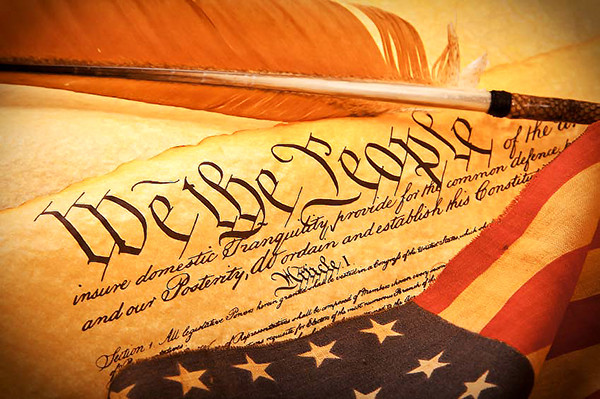
We the People

We live in a democracy, we like to think the world’s best, and certainly the world’s first in modern times (thinking of Athens in the Golden Age as USA-like in a very few respects). We vote – those who still feel it makes a difference or that we would be cowards not to try to make a positive difference. But that’s just it: more than half of us have given up voting, mostly because we are sure that there is nothing we can do that makes any difference whatsoever.

Robert A. Heinlein once mentioned a scale plotting the strength of an individual’s will (and so the probability of that individual’s survival) where the lowest point is named apathy. Giving up, believing that one has zero control, is the very definition of apathy.

Each of us has the potential to move the world. I have seen a little bit of this first hand, in a small microcosm of the Earth called the advertising business. I set out to change it and have already made some markups on it.

Moving an industry takes vast effort every day and is worth it. I recommend it to everyone. Just figure out what would make it better and cautiously make tentative suggestions for a few decades and see what happens.

If one person can change an industry, then with a little bit of gung ho cooperation among a bunch of people, it should be possible to change the world.

And now we’ve got the Internet. When I first started thinking about what were called “online services” in the late 60s, the word “democracy” just kept popping up in my head all the time. I saw webcams becoming a part of a new type of social television – something which I am sure will happen at some point in the sequencing of media revolutions still to come.

I hoped to be one of those bringing together positive thinking, socially aware advertisers as sponsors with similarly aware networks to create a new screen programming, totally interactive and melding Town Hall with Delphi techniques, to actually influence the thinking of politicians, and to provide a platform for bringing forth inventions and ideas from the entire citizenry to public attention at large.

I reasoned to myself that even just based on the people and ideas I knew were available, the programming would be entertaining and super informative and would garner a huge rating. People like Norman Cousins, Eric Sevareid, Walter Cronkite and Jimmy Carter, to name just a few, gave positive feedback to some of these ideas, and kept me charged to continue another step in the journey. And then another. I continue to this day, and hope you will join me in the co-creation of democracy social screen programming.

Taking a step back, there is another matter, another toolset we will need along the way. Taking some share of screen audience each day to play a game of running the world, and actually having impact, that’s one thing. But will it go far enough? What are the root causes of the ills we’re trying to cure?

They come back to the need for evolution of the minds of the people at the top. Those who are having the biggest effect on history. They are still getting into wars like the petty kings and dukes of yesteryear. They have not mentally, emotionally, and spiritually evolved far enough to rise above the emotions within that cause them to get us into wars.

So whatever kind of Television/Internet (I have been calling it “screen” to cover all screen media – yes, even cinema) we create, no matter how many great ideas we bring to light, the people who control our lives will only move inches and not miles per year as a result, unless we can get into their heads and make the necessary adjustments. And before we can say this justifiably, we have to get into our own heads and make sure of our own motivations.

If we act out of pride and self-aggrandizement, we are right there with them. Only by taking the long view and the big view – that we are grateful to the Universe for having us, and we want to give back in that spirit by taking care of as much of the world as we can nurture – only by being ourselves nobly motivated can we help make the shift at the top.

This is what I call psychotechnology. It is the subject of my books and videos, which are designed to get the reader/viewer to objectively look inside and consider certain adjustments to get into a higher, more effective state of consciousness.

With psychotechnology and new media we can change the world for the better. It will not be easy nor quick. But it would be cowardly and apathetic to shy away from the task. Let’s do it together.

Impressed by the words of the Pakistani shopkeeper, I made a straw man list of 14 things we should expect from our government. I started where he started and added the rest by stream of consciousness. What you see below is how it came out, not in any systematic order yet.

Of course safety (protection) is on the list, and people who know me know of my great respect for our military. I am not against defense when I write about the need to wind down on wars. I have given many workshops to the military over the years and have met great-hearted and super intelligent people there. People who glom onto psychotechnology without a moment’s hesitation.

I didn’t put protection on the top of the list because, if we do our job right, within a century the world will be run by highly evolved human beings and the need for protection will gradually move down the list. So it came out near the bottom because I was thinking of the future ideal state – the one our children’s children’s children will inherit. Alas it cannot be removed from the top of the list yet – a sad statement about the leadership of the world in general.

That is not a blanket statement about all of the world’s leaders. I think we have some of the smartest – yet they need to look inside to better resolve their emotions into more Solomon-like action reflecting true wisdom.

The following list, being a pro forma, contains items some of which really fall into the bucket of another item on the list – “A Good Economy” would give us many of the others. But for the people who have not, it is worth spelling out even if duplicative.

The list in itself is something we can refine over the next hundred years. Meanwhile let’s get to work on building the screen superhighway through which democracy will flow healing ideas into the minds of those at the control switches.

14 THINGS EVERYONE NEEDS FROM GOVERNMENT

  1. We need Light
  2. Water (clean, please, including oceans)
  3. Health
  4. Education
  5. Clean Air
  6. A Good Economy
  7. Jobs
  8. Fair Pay
  9. Fair Costs of Living
  10. Safety (protection)
  11. Facilitation of Individual Development (I would put this one on top)
  12. Freedom
  13. Democracy (sharing of control)
  14. Equality

Best to all,

Bill

Follow my regular media blog contribution, “In Terms of ROI“ at MediaVillage.com under MediaBizBloggers.

What is it that is tearing us apart? MONEY!?

Volume 2, Issue 31

At least it isn’t anything important like hatred — there’s still hope for us then. Obviously money is what has brought the two major political parties into greater animus than I can ever remember existing before.

The Republican Party insists it will not back legislation that adds any tax burden to the rich, but instead wants to close loopholes. Why not do both? Unacceptable, is the hard line taken up front. As if there is something in principle wrong about asking for help from the most able at a time of crisis?

Undoubtedly the hard line rests instead on the idea that swollen government is the main problem so it must be starved.* Or maybe there’s another explanation that would make sense if explained to me.

A long dispute means that both parties are wrong.

— Voltaire

 In our last post we wrote about creative compromise. The kind of creative compromise that we need to make in the tax domain is exactly where we draw the line between “the people with enough money to do more” and “people who make a decent living but whose retirement is by no means certain”.

One nicety that has already come to public awareness is that of small corporations — where the proprietors are filing taxes combining the business with the personal — which makes these individuals appear to be wealthy. There should be a way to word the legislation so that mistake does not happen. Jobs will not be stimulated by heavier taxes on such folks.

Not sure that $250K/year is any kind of magic number that signifies ability to pay more taxes. That’s the top 4.2 percent of taxpayers. However, in our October 25 post I shared the IRS stat that the top 0.1% received 7.8% of all U.S. income in 2009. Maybe we don’t need to come all the way down to include 4.2% of taxpayers to accomplish our goals of deficit reduction and investment in America’s future? Perhaps it can be just 1%, and perhaps we can offer psychological inducements, by encouraging investments as we’ve discussed here many times.

If the government budget contains too much money for people who need that money for survival, we cannot take it away from them — we need to use that money to retrain them, another idea you’ve heard here and elsewhere.

The need to take from the rich and give to the poor is a good idea from the standpoint of making the whole country an even greater success, but only if it is a temporary idea not a way of life.** Hence the importance of training people or even investing in their family business rather than just keeping them on subsistence existence of no value to themselves or others.

Robert A. Heinlein wrote a utopian novel called For Us, The Living  in which he projects a future where the government prints and gives us all the money we need. The idea came from economist C. H. Douglas in the 20’s — he called it Social Credit. When the Depression came it was actually put into being, in 1935, as the economy of Alberta, Canada, with Douglas as the economic advisor. It never had a chance to succeed or fail because it was shut down by the courts — i.e. for ideological reasons, without letting the experiment play out.

Farfetched ideas like this need to be given careful consideration by economists. I invite any economists reading this to post their comments in answer to the following question:

If the U.S. started doing Social Credit and people within the U.S. were fine with giving and taking these dollars from each other so hyperinflation did not occur domestically (though foreign trade would be hard hit), could the country do just fine using only its own resources or what further refinements in such an idea would make it workable and desirable to all?

Sure, I know it sounds like Communism. Heinlein admitted the same but emphasized that it does not stifle individuality the way Communism does. People in his story are independent, do what they want to do with their lives, and tend to wind up not being takers but instead giving greater value to others.

What if we did a test? Only do it as an investment, and only to those people who show a plan of what they intend to do for that money, with a diverse nonpartisan board or Internet voting to decide which plans were worthy of backing. We could budget for a million households as a test of the idea. If people knew they had so high as about a 1 in 100 chance of being selected, a lot of people would be motivated to write plans of what they would do with their time for their own enjoyment and the good of others — if only they had enough money to pay their modest bills. It would focus us all on positive solutions. Since it would be an investment, the money would be repaid in the normal way that investors recoup. If the idea worked, it could be rolled out.

Another crazy idea scenario for economists to play with and form into something workable: forgiving all debt every 50 years starting now. Leviticus in the Bible advises that every 50 years mortgage debt is to be forgiven, which was called a Jubilee Year. Economists could run computer simulations or whatever would provide a trial-and-error feedback mechanism to tinker this advice into potentially workable models.

Again, whatever we do has to be done domestically first (and test-piloted) because the idea of getting the whole world to do something radical with money seems a bit over the top. If the hunch that the U.S. needs to experiment monetarily on its own is right then it has to be built into whatever strategy we creatively and unifyingly come up with in the days ahead. Now is the time for creativity and consensus building, not for naysaying. We are hard up against it.

But we shall prevail.

Best to all,

Bill

*”Starve the beast” was an idea first promulgated by Republicans in the late 70s and 80s. “The beast” refers to welfare, Social Security, and Medicare, and does not usually refer to spending on the military, law enforcement or prisons (per Wikipedia). You might find this Forbes commentary of interest:
http://www.forbes.com/2010/05/06/tax-cuts-republicans-starve-the-beast-columnists-bruce-bartlett.html

**Although CEO compensation has skyrocketed off the chart while average wages are flat, and this in itself appears to be a prima facie social ill.