Tag Archives: Consciousness

Data Mining Your Own Intuition — Revisited

Updated on April 3rd, 2020

Intuitions often come to us when we are in entirely new situations, as we all are in today, so this post may have special relevance to all of us.

Have you ever had an intuition?

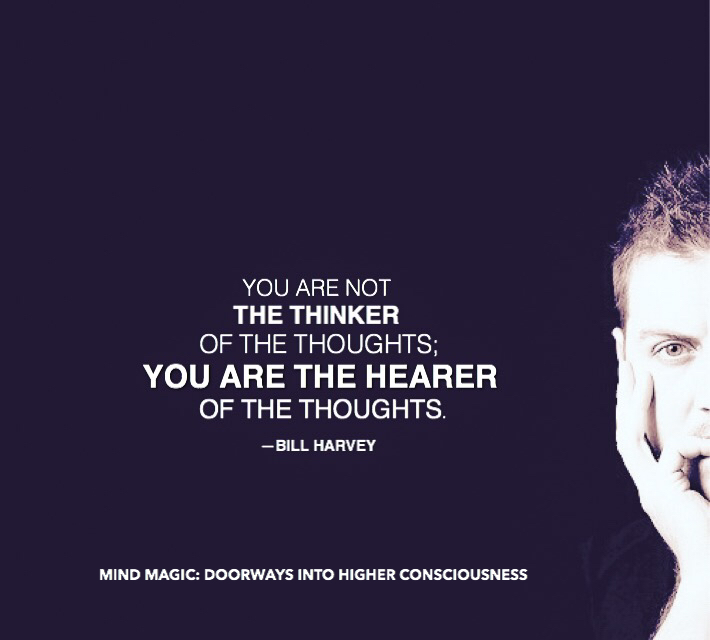
You are the HEARER of your Thoughts

Intuition is when an idea pops into your head fully formed without being preceded by a step-by- step logical chain. These intuitions may come to you with “cognitive elements” usually in the form of a feeling. You understand the meaning of your thoughts and what it is you are saying to yourself, without having heard words spelling it out. Although often there may be no image that you can see in your mind, in heightened states of consciousness you may be able to see an image tied to this intuition.

These ideas flash into our mind and usually flash right out again unless we have a strong and abiding mental intention to pay attention to and remember their content. Without such conscious intention, we probably won’t even notice these fleeting intuitions. They are a subtle guidance system that does not speak loudly in our mind.

Dan Goleman points out that at least some of these feelings — the ones we call “gut feelings” — are called that because we sense they are somehow coming from our gut, which is accurate because the part of the brain from which these intuitions come (the basal ganglia) is also associated with the nerve connections between the brain and the gastrointestinal system. These intuitions are really the net guidance stored from our experiences in the form of summary action implications that tell us the way we are going either worked or failed in the past.

By contrast, the ego voices that dominate most of our mind at most times are loud, strident and salient. These ego voices are the thoughts, inner dialog, and feelings that are linked to our base motivations. We are pulled around by our negative fears and anger reactions to events around us when we feel our livelihoods and social standing are at stake and sense at any moment something can be taken away from us. The ego is also stressed out due to Acceleritis™ (Information Overload), thus exacerbating its own predisposition to worry.

As a result of this inner competition for attention and the fact that most of our attention at nearly all times is cast outwards not inwards, we don’t even catch these intuitions in the first place.

If we do catch the intuition, it is generally not heeded because of the jumble of subsequent louder thoughts giving us impulses to verbally fight, complain, argue, dismiss, or otherwise rain on whatever it was that somebody just said that may have triggered the intuition.

How to Use Your Intuition More Effectively

This is a testable hypothesis — try this:

Start a program of paying attention to your own hunches and look for them to arise. When they do, put off the other business that seems so important to the ego and everyday mind, and focus on what your intuition just told you. Make sure you remember the content by either writing it down or forming a keyword, key phrase or key image that will serve as a retrieval mechanism to bring back the whole content of the idea.

Then at an appropriate time in whatever is happening, tentatively see if the application of that intuitive idea seems to contribute anything to the situation taking place around you. Do this instead of — or at least before — offering the people around you any of the subsequent jumble of thoughts that came after the intuition.

On the other hand, you might see what the intuition is and realize that although triggered by the current situation, it really applies to another situation. Then wait to tentatively apply the hunch until you are in the other situation. In this case also resist the tendency to edit that first flash — though using diplomatic language is always a good idea so long as you do not distort the original idea.

Sometimes the intuition gives us not the right strategy but rather a strategy that although wrong will lead to the right answer, one that might not be reached other than through considering this wrong answer. Socrates appeared to know this — he flowed with his intuitions yet by phrasing the ideas as questions he protected himself against error.

Most often our mental process is to speed past the intuitive event and come up with some other strategy for dealing with the present situation. If we even retain memory of the hunch, our tendency is to later edit and “improve” upon it, which often has the opposite effect. Based on my experience, stick with the way it appeared in the beginning — the odds favor this being the successful course of action.

Best to all,

Bill

Read the latest post at my media blog  “In Terms of ROI“ at MediaVillage.com.
Rising Above Negativity

Original post November 17, 2015

Most of us assume there is nothing we can do about negative emotions — they come as they will, and we must just suffer through them. However, we all know someone we’ve seen rise above these feelings. With the world facing so many unprecedented challenges, it is vital that we increase our ability to rise to the occasion and surmount negative feelings.

Rise Above Negative Feelings

It’s difficult if not impossible to overcome negative feelings while remaining in our everyday “waking” state of consciousness. We can say, “I am going to put those emotions aside and get down to the business at hand”, but many of us don’t seem to have the willpower to do it. The trick is to rise out of the “waking” state of consciousness and move into the Observer state, where we are able to more easily turn off unproductive feelings.

The first step is to turn down all distractions. Create an alone space where you can’t be interrupted, where you can’t hear voices in the next room, where there isn’t a TV or some other device playing, where you’re not under time pressure. Have writing tools handy, or a sound recorder. Begin to try to understand why you are in a negative state. Be patient and wait. Once your mind knows you are focused on just one thing, which is to diagnose why you feel the way you do, it will soon start to give up answers to the question. They may be obvious or not-so-obvious. You may find yourself writing down the not-so-obvious aspects or simple phrases that are now suddenly more revealing and meaningful than you expected, which cast new light or simply state things you already knew but in much sharper and more useful language than you had access to before.

What you are doing is called contemplation.  You are flying higher, getting above the weather, so whatever weather disturbance or turbulence you experience must be rejected. Put aside whatever feeling or thought is familiar, like you have been there before. Reject ordinary thinking and feeling. Say to yourself, “That’s not constructive, it’s not getting me anywhere, and it doesn’t lead to a solution. I need something NEW.”

Strip it away as it arises and see what is underneath.

Where is it coming from?

Where did the whole pattern start?

What did I want that led me to this negative mindset?

What is really happening?

What is IT trying to teach me?

How can this situation possibly be something that can make me better and stronger?

Get creative. Generate out-of-the-box ideas. Visualize what someone you look up to would do. Come up with ideas that will not engender resistance, where you go with the flow and not against it. In Taoism it is called getting into the rhythm of the Tao, linking into the underlying force of the universe.

Best to all,

Bill

Follow my regular media blog, In Terms of ROI at Media Village.

The Power of Respect

Originally posted November 3, 2015

If you are a leader within your organization (and anyone can be a leader, at whatever level you’re at) the single best thing you can do to mentor, nurture and develop your team members, bringing out the best in each one of them, is to create a mood of mental optimization.

Mental optimization is a mode of consciousness that shapes our choices, our information processing priorities, indeed everything that we do.

[dropshadowbox align=”center” effect=”lifted-both” width=”40%” height=”” background_color=”#c5e1e4″ border_width=”1″ border_color=”#dddddd” inside_shadow=”false” ]Leaders lead by example.[/dropshadowbox]

In any situation, we can choose to quickly set aside anger or negativity and begin to define the problem, search for opportunities hidden or obvious, and refine solution-oriented, win-win action plans based on feedback along the way. This strategy turns challenges into wins by not wasting time with negativity or letting it interfere with our ability to find win-win solutions. Obviously, whatever the setting, we can’t come up with perfect win-win ideas if we want someone to lose because we are angry at them.

CHOOSE to let go of anger and negativity

Negativity is useless and obstructive.

If we model a positive attitude, everyone will more likely be in a mood of enjoying the game of making things better, each second, the way a hero/heroine does, without internal pettiness.

[dropshadowbox align=”center” effect=”lifted-both” width=”45%” height=”” background_color=”#c5e1e4″ border_width=”1″ border_color=”#dddddd” inside_shadow=”false” ]We all need to feel respected.[/dropshadowbox]

The thing that often causes people to quit their jobs ultimately comes down to respect. Either we didn’t feel enough of it, or our position somehow compromised our internal self-respect, or often both. People can be encouraged to stay with an organization if true respect is cultivated in the right ways, not out of misdirected fanning the flames of ego.

What is the right way to show respect?

  • No interrupting.
  • Provide just the right degree of autonomy i.e. don’t micro manage.
  • Don’t use lateral second-guessing as a method of quality control, which is a subtler form of micro managing.
  • Offer suggestions aimed at optimization goals held in common by those in the conversation, without putting down anyone else’s ideas.

Again, leading by example is vital. In meetings, make sure everyone is allowed to finish their thoughts — subtly, especially if it’s someone else’s meeting. Rare exceptions would be, for example, when someone is talking too much and slowing things down — be careful to use respect and ensure respect from the team to the person who is being longwinded, while keeping things moving. One elegant way to do this is to offer an offline meeting with that person at a later time, at which time you would show respect in offering constructive feedback. Your team member will appreciate the feedback if it’s done in the right way — the optimization focus with respect — not a put-down.

The optimization mood gives you permission — in fact mandates you — to tell team members the hard truth of what they need to improve on, but with respect so they can actually get it.

When all team members display a positive attitude and show respect across the board, all organizations will run enormously better. The list of benefits is endless.

Best to all,

Bill

Follow my regular media blog contribution, In Terms of ROI at Media Village, Myers new site. Here is the link to my latest post.

Freedom from Fear

Originally posted October 6, 2015.

Today many of us live in fear of losing our job, and maybe we’re also fearful about our health and the health of our family and friends. And with a daily news diet of horrific acts of violence seemingly happening everywhere, many of us may be fearful about our safety and the safety of our loved ones.

Some of us are afraid because we’re constantly trying to prove ourselves to our mother, father, spouse, critic or rival sibling, or to one of the people who has been unknowingly cast into taking over one of those roles. These “critics” become internalized as hidden senators in our mind, playing the taped and aped voices of others.

Cultivate Freedom from Fear

Our fears are often hidden, even to ourselves. Cultivating a state of being the Observer can help to remove the hidden blockages within, empowering us to be more present in the moment. The Observer state can be used to detect flashes of fear that come and go so fast that we aren’t usually aware of them in our normal waking consciousness state. In Observer state, one is actually observing the mental function of repression taking place, which can feel quite amazing.

Here’s one method to help you get into Observer state. Give yourself some alone space. Whether it’s outside in nature or in a room with the door closed, the idea is to remove yourself from all distraction. (Eventually you’ll be able to create this “alone space” mentally, even in a crowded airplane.) Concentrate on your breath, just letting it flow in and out, and keep your eyes on whatever is in front of you. For the moment, you are concentrating on what you see and experience subtly.

What you may see is that in one moment you were in a pretty normal state of mind and in the next moment your mind is naturally quiet and your senses are highly attuned. You are not easily distracted, you feel centered and aware, balanced and unafraid. Your attention is on everything around you and there is no obsessive stream of internal dialog. You are making no effort toward this whatsoever, you are not striving. It is doing itself naturally. When ideas pop into your mind while you’re in this state, you may notice that they are unusually insightful and self-evidently important to your life. With practice, you’ll experience this more often.

Use the Observer state to root out things you are hiding even from yourself, and make a deal with yourself to expunge all negative emotion — including fear. Through this doorway lies the Flow state of consciousness, the ecstasy of simply being, with freedom in place of fear.

In Flow state, inspirations keep popping even in the middle of a sentence and you incorporate them easefully because you are not afraid you might say or do the wrong thing. Not because doing or saying the wrong thing is impossible in Flow but because it is irrelevant. If you are communicating in a state of Flow, the object is not being right but instead collectively reaching truth and right action — as Socrates pioneered.

Best to all,

Bill

Follow my regular media blog contribution, In Terms of ROI at Media Village, Myers new site. Here is the link to my latest post, Identifying the Ethical Limits of Persuasion in Advertising.