
Powerful Mind Part 39
Welcome to this week’s Bill Harvey Blog, December 5, 2025
Read Powerful Mind 38 | See all 12 Powerful Mind Keys
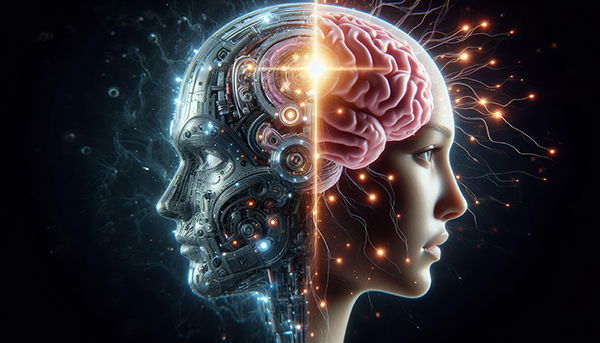
No computer system before the current Large Language Models (LLMs) has fooled humans into thinking that the computer is human or its intellectual equal, a concept known as the Turing test, which was proposed by one of the pioneers of modern computing, Alan Turing, in 1950. What is impressive about LLMs is how human their text sounds.
What’s even more impressive is that they essentially perform a kind of autocomplete, similar to how our computers or smartphones predict the next word or words we are about to type. ChatGPT and the other LLMs are large-scale versions of the same algorithm. The massive amount of training data fed into them makes them sound like us and be correct so often.
Unbeknownst to us, our brains have always had a similar built-in function. It stayed hidden from us for so long because it passed the Turing test. We considered it our own words to ourselves.
This function predicts what we will say next based on our past words (similar to AI’s training data) and on what we just said to ourselves a moment ago (which acts as the prompt to be autocompleted).
Occasionally, the robot (which I also refer to as the inner biological AI or bio-AI) might escalate what we just said to ourselves (the prompt), using terms we’ve used in the past (training data) in association with the word we just used. “Escalate” means taking our prompt and turning it into a more extreme statement as a follow-up. In this way, the inner AI may contribute to our familiar collective leanings into extremism throughout recorded history and never more so than today.
The problem is that we treat all our thoughts as equally valuable, both the ones we say to ourselves and the predictions made by our internal robot. We didn’t know about this robot thing before, so we assumed that any thought in our mind was driven solely by our free will. However, we find that this is not the case. There is another word source that accesses our memory systems and predicts or suggests what to say next, like today’s LLM chatbots.
Why does such a system exist? Presumably created for survival, it reminds the self how to respond quickly to specific incoming signals. However, it tends to stay consistent with our past selves, and thus, it may potentially underestimate where we have evolved to at the current moment.
In Emergency Oversimplification Procedure (EOP), also known as the Default Network, we will accept these sneaked-in inputs as our own.
In the Observer state, which with intention and practice arises from the Executive Control Network, we realize we’re about to go over the edge, and we pull ourselves back.
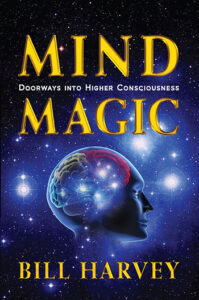
However, even in the Observer state, for the past few millennia, we have not known that the human brain has these predictive abilities, and they are right now being discovered by science. Using introspection, I discovered the robot and wrote about it in my 1976 book Mind Magic.
From my own direct experience, I link the robot with Freud’s concept of the Ego. In Civilization and Its Discontents, he writes that the ego first arises when the baby feels needy and frustrated. It acts as the self, but it is actually a self-protective layer of mind on top of the id, the original self. In childhood, I was able to understand my own actions through this lens of distinguishing the different voices in my mind.
Science is now confirming that the robot, as I wrote about it in Mind Magic, is a real thing, not just a metaphor. It’s as if a cosmic chunnel is being built from two ends, science and introspection, and they are actually connecting.
The verification for these psychotechnologies – the 12 Keys, among others – by science is coming at just the right time. The upcoming generations feel handed a raw deal and fearful about their future, and they spend most of their time in EOP, like the majority of us, ill-equipped for the likely challenges. Psychotechnology can achieve maturity of thought processes relatively quickly.
When Observer state is achieved, it enables objective formal operational and systems thinking. One starts from understood and believed-in goals, then proceeds ethically and thoughtfully to achieve those goals. Each individual in this converted state is on a Mission with a known purpose. Having a Mission makes the individual less willing to give in to useless inner negativity and more self-disciplined about taking prompt but unhurried action aimed at carrying out the Mission.
The individual achieves meaning without the same constant dependency on media diversions. Moving toward a future of one’s own shaping, life is exciting enough on its own. In Observer state, each challenge is a learning experience on the way to the goal.
Further psychotechnology balances this drive with resilient nonattachment to outcomes. Yerkes and Dodson proved that optimal arousal causes superior performance vs. maximal arousal. Czikszentmihalyi proved that there is a state above Observer state which he famously called Flow state. Yale’s Neuroscience Master Chun notes that the random chatter between lobes disappears in Flow state.
Spiritual psychotechnology opens up the individual to the possibility of cosmic connection and how to recognize and work with it.
Worry and Fix
Two little words. And yet a philosophy can be built on them.
A 50,000-foot view of what goes on in our minds is a mix of these two things. We’re always either worrying or fixing.
A great many people worry almost constantly. This appears to leave them little time for fixing.
A few of us have learned to minimize time spent worrying and maximize time spent fixing.
The two strategies are poles apart in terms of success rates. And inversely poles apart in terms of popular adoption.
But why would people choose to waste time worrying when they could be fixing?
People generally do not believe they have the power to make a difference in their own lives, let alone to change the world. They feel swept along by forces much stronger than themselves, some coming from the outside and some coming from the inside.
The traitorous thoughts coming from the inside are the ego, the aspect of self which resists community mindmeld; it is always in a cold war against the others perceived to be separate beings, essentially competitors, rivals. Everyone else is the potential rival.
Everyone else is also the threat vector coming at the ego from the outside. Inside and outside sources appear to agree on the dangerous nature of the others. Everyone else.
In higher states of consciousness – specifically Observer state and Flow state – these paranoid delusional biases are identified instantly by a person. In Observer state, one is conscious of one’s own judgment swings and even fine-tuning adjustments taking place from moment to moment.
In the higher states, there is no worry because every challenge is accepted with valor, and all time is spent on fixing, building, and creating. Worries streak in, and last only fleeting minutes, while the focused mind dissects them and establishes new rules of engagement (fixing).
The present environment is geared toward producing hyper-over-stimulation/distraction. This is the result of Acceleritis over the past six millennia. We became stimulation junkies and invented technodrugs to feed that addiction.
At one time not so very long ago in the West, we felt very confident and competent. In the East and South, where most of current growth has come from, there was great hope.
Now, uncontrolled thoughts and feelings have stampeded the herd. This is all utterly unnecessary.
We have the skills and resources to fix everything, even at the advanced state of ruin we have already made of the planet and its species.
But not without working together.
If we continue to wallow in delusional hate fantasies while Rome burns, well. You know how that ends.
Can we all please wake up from the nonsense and get to cooperating to fix the mess we made?
Further methods of attaining inner clarity (Key #10) in Part 40.
See all 12 Powerful Mind Keys
My best to all,

NOTE: This blog post is an update to a former post titled “We Each Have a GPT4 Within Us.”
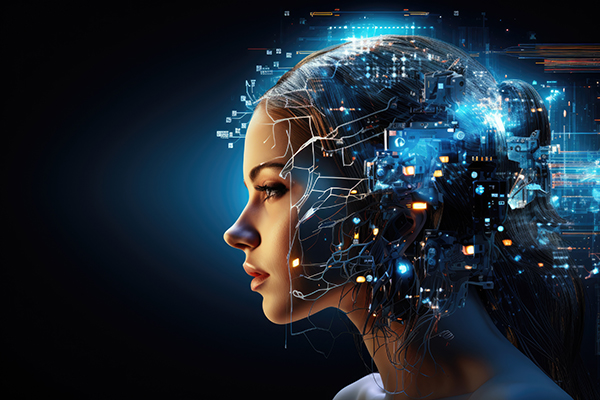
 “When you are about to see something, your mind automatically searches your memory for a comparable object (note the distinction between you seeing something and your mind having already seen it). If your mind finds something similar enough, it projects the stored image onto the new object so that you do not ever see the new object, but are merely dimly aware that there is a familiar type of object there… As a result of this, you mostly do not perceive your environment, instead perceiving mostly what you expect to perceive, i.e. you usually see your mind’s prediction.”