Category Archives: A Plan for America

Even in Uncivil War, Can We Agree On Some Things?

Welcome to this week’s Bill Harvey Blog
Created February 13, 2026

George Washington

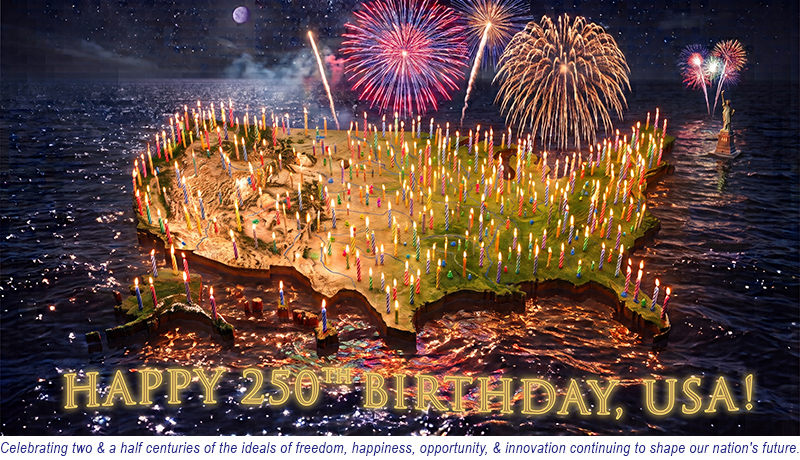
This July 4th is the 250th Anniversary of the Declaration of Independence. The USA has been around for a quarter of a millennium. The longest running Noble Experiment in Self Rule by The People. Often referred to in the past as the Greatest Hope For The World.

And yet these are among our darkest hours, on a par with the Civil War, the War of Independence, and the early days of WWII, when we were not sure we could win it. Another one of those times when the continued existence of the USA as conceived by The Founders is not guaranteed.

We have not had many of these existential threat periods in our history. Only a few of us alive today were there the last time this happened, which was the dark period between December 7, 1941 (Pearl Harbor) and February 2, 1943 (the battle of Stalingrad). The Allied victories at El Alamein and the battle of Midway, followed by Stalingrad, turned the tide and made us feel certain we were going to win, surely at terrible cost in lives.

We are back in one of those situations again, perhaps the worst of all, because we are internally at war with ourselves, as in the Civil War. But this time it seems to go much deeper than in the Union vs. Confederacy war. Is it because of the mind-bending media we now have, which are being used intentionally and unintentionally to divide us? The race issue is still a part of it, but now there appear to be many more issues which divide us. Is one key difference between the Civil War and today’s internal polarization that we now face a horde of irreconcilable issues?

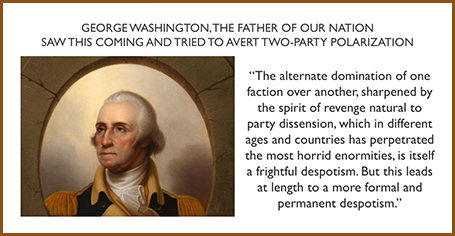
I wonder. It’s conceivable that we are closer together than we realize on a great many (not all) issues. What puts the venom in the situation is the divided loyalties caused by the existence of two teams that have always been rivals, and that rivalry in recent decades has become increasingly bitter (see quote from George Washington at the top of this article).

If We The People still want to rule ourselves, and if we are dissatisfied with both political parties to some extent, can we set aside the teams for a while and just talk amongst ourselves about the issues? (Thanks to Bob DeSena for his ongoing emphasis on issues, without which I might not have gotten this idea.)

But let’s not look at that one idea as a panacea. It’s likely that even when discussing the issues, there will be a tendency to flare up when it becomes evident that one’s party has a very different vision on that issue than the other party. It will be difficult for people to be able to separate party loyalties from the issues. In higher states of consciousness (Observer state and Flow state), one can perform this trick, but in the default network state of Emergency Oversimplification Procedure (EOP), automatic reactions will follow ingrained patterns.

So what can we do to bring us all back together again?

It’s still worth thinking creatively about issues, and sharing any innovative ideas in social media, with your government representatives, and with your friends, family, and acquaintances. Good ideas tend to bubble up in the zeitgeist. Don’t look for getting credit for your good ideas, spread them unselfishly for the good they may do, and be satisfied if they get a public hearing, even though no one remembers it was your idea.

The political discourse has, in my lifetime, been plagued by a paucity of creative new ideas. It always seems to be the same old ideas recirculated again and again. People want a change from that.

There is something else we can all do, which will have a positive effect even though it may sound like magical thinking.

Imagine the two warring sides gradually, like a giant zipper that has been unable to zip closed, finally slowly closing, one click at a time, as the two sides see ways to agree on one little thing at a time. Picture how it might happen. Two people discussing one of our many problems and somehow, between them, converging on common ground solutions that have never been tried or even thought of before.

Outside of politics, these Aha moments happen every day. People are more creative than ever before. Thirty million Americans are now Creators; everyone is writing books, blogs, doing podcasts, and we are more creative now than ever before. Let’s bring politics into the creativity game. It doesn’t have to be a sad show forever. It wasn’t a sad show to be a patriotic American for a quarter of a millennium. It has only been sad for a little while, and we are feeling like there is no light at the end of the tunnel. That feeling itself can be a self-fulfilling prophecy. Undo that feeling.

Here’s what some of our Presidents said about these subjects, worth remembering in honor of Presidents’ Day:

John Adams, the second President of the USA:

“The happiness of society is the end [goal] of government.”

“There is danger from all men. The only maxim of a free government ought to be to trust no man living with power to endanger the public liberty.”

James Madison:
“The Constitution is the guide which I will never abandon.”

James Monroe:
“The best form of government is that which is most likely to prevent the greatest sum of evil.”

“A free, virtuous, and enlightened people must know full well the great principles and causes upon which their happiness depends.”

“National honor is national property of the highest value.”

John Quincy Adams:
“If your actions inspire others to dream more, learn more, do more and become more, you are a leader.”

“’Courage and perseverance have a magical talisman, before which difficulties disappear and obstacles vanish into air.”

Andrew Jackson:
“Every good citizen makes his country’s honor his own, and cherishes it not only as precious but as sacred.”

“As long as our government is administered for the good of the people… it will be worth defending.”

“Any man worth his salt will stick up for what he believes right, but it takes a slightly better man to acknowledge instantly and without reservation that he is in error.”

Abraham Lincoln:
“The struggle of today is not altogether for today – it is for a vast future also.”

“It is for us the living, rather, to be dedicated here to the unfinished work which they who fought here have thus so far nobly advanced.

“With malice towards none, with charity for all… let us strive on to finish the work we are in.

Thomas Jefferson

Love to all,
Bill


Live chat with my avatar now.


POWERFUL MIND 12 Simple Keys
available February 16

POWERFUL MIND 12 Simple Keys by Bill Harvey

A July 4th Message from the Father of Our Country

Welcome to this week’s Bill Harvey Blog.
Updated July 3, 2025. Original post: July 2, 2021

HAPPY AMERICAN INDEPENDENCE DAY 2025!

The address of Gen Washington to the People of America

Washington’s Farewell Address

For at least two decades from July 4, 1776, George Washington was the most trusted person in the United States of America.

The Walter Cronkite of his times.

He served as President when, to him, the job was a burden rather than a prize.

He was the glue of authenticity and integrity that gave our country its chance to build a foundation that would last.

For two decades, he made parties unnecessary, because all differences could be resolved in him.

And then, when the party divisions arose with their bitterness and hate, he stood down and would not accept another term as President. He was 64. Average life expectancy for an American male was 36.

In departing, he was sure to warn us about the forces that were arising to counter the most innovative governmental structure in history.

In this post, I will read you some excerpts from George Washington’s final address, his last guidance to the children of the country he helped create and lead through its fragile infancy. I’ll also provide the link to the full going away letter he left for all of us, which is read annually to both houses of Congress.

I hope it revitalizes your true loyalty to our true bedrock principles, and helps bring the unity we need now more than we have ever needed it before.

Washington begins by humbly and diffidently explaining why he will not accept another term in office:

Transcript Excerpts of President George Washington’s Farewell Address (1796)

Friends and Fellow Citizens:

The period for a new election of a citizen to administer the executive government of the United States being not far distant, and the time actually arrived when your thoughts must be employed in designating the person who is to be clothed with that important trust, it appears to me proper that I should now apprise you of the resolution I have formed, to decline being considered among the number of those out of whom a choice is to be made.


Later in his address, he warns of the dangers of the political parties just then sprouting up in America:

I have already intimated to you the danger of parties in the State, with particular reference to the founding of them on geographical discriminations. Let me now take a more comprehensive view, and warn you in the most solemn manner against the baneful effects of the spirit of party generally.

This spirit, unfortunately, is inseparable from our nature, having its root in the strongest passions of the human mind. It exists under different shapes in all governments, more or less stifled, controlled, or repressed; but, in those of the popular form, it is seen in its greatest rankness, and is truly their worst enemy.

The alternate domination of one faction over another, sharpened by the spirit of revenge, natural to party dissension, which in different ages and countries has perpetrated the most horrid enormities, is itself a frightful despotism. But this leads at length to a more formal and permanent despotism. The disorders and miseries which result gradually incline the minds of men to seek security and repose in the absolute power of an individual; and sooner or later the chief of some prevailing faction, more able or more fortunate than his competitors, turns this disposition to the purposes of his own elevation, on the ruins of public liberty.

Without looking forward to an extremity of this kind (which nevertheless ought not to be entirely out of sight), the common and continual mischiefs of the spirit of party are sufficient to make it the interest and duty of a wise people to discourage and restrain it.

It serves always to distract the public councils and enfeeble the public administration. It agitates the community with ill-founded jealousies and false alarms, kindles the animosity of one part against another, foments occasionally riot and insurrection. It opens the door to foreign influence and corruption, which finds a facilitated access to the government itself through the channels of party passions. Thus the policy and the will of one country are subjected to the policy and will of another.

There is an opinion that parties in free countries are useful checks upon the administration of the government and serve to keep alive the spirit of liberty. This within certain limits is probably true; and in governments of a monarchical cast, patriotism may look with indulgence, if not with favor, upon the spirit of party. But in those of the popular character, in governments purely elective, it is a spirit not to be encouraged. From their natural tendency, it is certain there will always be enough of that spirit for every salutary purpose. And there being constant danger of excess, the effort ought to be by force of public opinion, to mitigate and assuage it. A fire not to be quenched, it demands a uniform vigilance to prevent its bursting into a flame, lest, instead of warming, it should consume.

He goes on to warn against the danger of one branch of government becoming dominant:

It is important, likewise, that the habits of thinking in a free country should inspire caution in those entrusted with its administration, to confine themselves within their respective constitutional spheres, avoiding in the exercise of the powers of one department to encroach upon another. The spirit of encroachment tends to consolidate the powers of all the departments in one, and thus to create, whatever the form of government, a real despotism. A just estimate of that love of power, and proneness to abuse it, which predominates in the human heart, is sufficient to satisfy us of the truth of this position. The necessity of reciprocal checks in the exercise of political power, by dividing and distributing it into different depositaries, and constituting each the guardian of the public weal against invasions by the others, has been evinced by experiments ancient and modern; some of them in our country and under our own eyes. To preserve them must be as necessary as to institute them. If, in the opinion of the people, the distribution or modification of the constitutional powers be in any particular wrong, let it be corrected by an amendment in the way which the Constitution designates. But let there be no change by usurpation; for though this, in one instance, may be the instrument of good, it is the customary weapon by which free governments are destroyed. 

To me, the humility, authenticity, and kindness of the Father of our Nation comes through loud and clear in these his last words of advice, to us his children, endowed to carry on the idealism of the Founders.

Let his spirit re-inspire us to our original Mission and Values, and help us return to unity with forgiveness and a renewed dedication to work together for the good of all of us.

What you feel when you read these words of George Washington…
You are feeling what it is to Be An American.

This American Noble Experiment is worth preserving!

Commemorating and honoring that Beacon for The World,

A song from the heart of Ray Charles in 2022, 50 years after first singing this rendition of it on the Dick Cavett Show.

I hope you agree with me that this post should be sent to as many Americans as possible. If we each send it to 10 or more people asking them to send it to ten or more people, by the sixth round at least a million people will have received it.

My best wishes to all,
Bill


Image source: George Washington, Public domain, via Wikimedia Commons

This image is available from the United States Library of Congress’s Religion and the Founding of the American Republic exhibition.

We Can’t Afford Widespread Neurosis Anymore

Created November 17, 2022

Welcome to this week’s Bill Harvey Blog.

It’s pretty obvious that the human race is somewhat out of control.

It could be that, in the past, it was even more out of control than it is now.

But if we look only at the time period since we learned how to make atom bombs, we are now at an “Out-Of-Controllness” level that is at an all-time high within the defined period.

Maybe we were more out of control during the Crusades, but we couldn’t do as much damage then.

Now as compared to prior to 1945, we have done vast destruction to the environment threatening our own survival, have caused innumerable species to go extinct ahead of us, and are still playing party politics and other warped games as if there are no consequences. That’s how much damage we continue to do every day, and we haven’t even started with the atom bomb toy yet.

Enough self-criticism. Now, what are we going to do about it?

The hub of the problem is the way we don’t use our minds.

We don’t use our minds as they were elegantly designed to be used, the way Socrates used his mind, the way Washington and Jefferson and Franklin and Lincoln used their minds… we have many good role models to choose from, as we come back from a race of neurotics.

What is a neurotic? WebMD tells us that “Neurotic means you’re afflicted by neurosis, a word that has been in use since the 1700s to describe mental, emotional, or physical reactions that are drastic and irrational. At its root, a neurotic behavior is an automatic, unconscious effort to manage deep anxiety.”

Acting irrationally is the core of being a neurotic. But don’t we all? Isn’t it irrational to get emotionally overwhelmed by certain situations? The point of the mind is that it has more than just reason as its powers. It has intuition, feelings, perceptions, conditioned motivations, “realized self” motivations, a subconscious, and more. We act based not only on reason but on all of these functions. And that’s the way it should be. However, we ourselves have very little insight into the way we function so it is all kind of a sloppy process. Until we start practicing what Aristotle called “the contemplative life” which modern science calls meta-cognition: the mind inspecting the mind. This is The Way out of neurosis.

The process needed for the entire human race is a cleansing of the spirit, a self-governed “mind wash” available to each individual. Right now, most people don’t even know that they need it. Most people who know they need it don’t want to admit it (they are the ones closest to leaping over the gap if they could transcend denial).

The estimable Norman Hecht sent me a very insightful New Yorker article which makes the point that Trump may be on his way out but that does not remove the appetites of the core that supported him. And what are those appetites? Fear-driven racism and extreme irrational behavior. And what class of behaviors do those fall in the range of?

Right. Those are neuroses. The class of mental/emotional/physical diseases medical science has been tracking since the 1700s.

Eastern psychology noticed those behaviors going back far earlier than writing, based on memes embedded in time-binding songs that can be tracked back to about 10,000 BC thanks to Herotodus, Plato, et al. We have known about these syndromes for a very long time and have never addressed the removal of the problem.

We talk about schemes to save the environment but not to save ourselves from mental emotional self-destructive behavior. Because that is the reason why neurosis is important to remove, because neurosis works against what the individual is motivated to achieve, which is why it is irrational.

If we continue to ignore the primary cause of all of our lethal threat vectors, and try to use outmoded and failed methods to reach reconciliation with China and the others with whom we are now engaging in reptilian combat rehearsal, we are in for a very bad future, as Fareed Zakaria points out in a recent article.

The international conversation as well as the domestic conversation both have to change if we are to show ourselves truly on the road to recovery from mass neurosis. This fictional conversation between the world leaders is closer to the direction we must go than is our present course.

Step one is to come to a clear understanding that there are other, better, ways to use our minds than the general method in use today. Neuroscience calls it the DEFAULT NETWORK. It is a random walk and results in random noise across the corpus callosum. From there we must go to the Observer state, the state of expert meta-cognition. Ram Dass and Daniel Goleman were generous in their comments on my methodology.

My approach is not the only way to free the mind. Psychotherapy, meditation, yoga, psychedelics under supervision with proper setting and mindset, innumerable approaches exist to move out of the default network, what my manual Mind Magic calls EOP (Emergency Oversimplification Procedure). And into a state of relative free will and autonomy, with full insight into your own conditioning which therefore neutralizes the effect of the conditioning.

Yep, you got it right, this is a rather unusual proposition: upgrade the mental/emotional competency of the entire world population. I totally agree, it’s over the top for me to suggest that such a thing is worth putting time into, when the amount of neurosis and its ingrained nature by this point appears insurmountable no matter how many of us want to change the world.

I just don’t like the alternative.

I say let’s give it a go, shall we?

Love to all,

Bill


Visit Us On FacebookVisit Us On TwitterVisit Us On LinkedinVisit Us On Youtube

USA: Nine of the Most Probable Scenarios

Created November 7, 2022

Welcome to this week’s Bill Harvey Blog.

On the eve of the most important election in at least the last 100 years, three writers have compellingly described a scenario in which the US at the time of the 2024 election goes into a period of guerilla civil war driven by the burning desire by some to forever live in a state of White supremacy. The writers cite history including very recent events around the world linked by a fear of losing White majority. They centrally point out that the playbook was put into the form of a novel called The Turner Diaries written by a neo-Nazi in 1978.

Barbara F. Walter writes:

Pages of The Turner Diaries were found in Timothy McVeigh’s truck after he attacked a federal building in Oklahoma City in April 1995. Patrick Crusius, the alleged El Paso Walmart gunman, and John Timothy Earnest, the accused shooter at a synagogue in Poway, California, echoed the book’s ideas in their manifestos. A member of the Proud Boys can be seen on video during the insurrection on 6 January 2021 telling a journalist to read The Turner Diaries.
The US is not yet in a civil war. But a 2012 declassified report by the CIA on insurgencies outlines the signs. According to the report, a country is experiencing an open insurgency when sustained violence by increasingly active extremists has become the norm.
In this early stage of civil war, extremists are trying to force the population to choose sides, in part by demonstrating to citizens that the government cannot keep them safe or provide basic necessities. The goal is to incite a broader civil war by denigrating the state and growing support for violent measures. Voter suppression bills have been introduced in almost every state since 6 January. Election deniers are running for office in 48 of the 50 states and now represent a majority of all Republicans running for Congressional and state offices in the US midterm elections this week.
Civil wars almost never happen in full, healthy, strong democracies. They also seldom happen in full autocracies. Violence almost always breaks out in countries in the middle – those with weak and unstable pseudo-democracies. We are already seeing elements of this in Europe, where rightwing anti-immigrant parties such as the Sweden Democrats, the Brothers of ItalyAlternative für Deutschland in Germany, the Vlaams Belang in Belgium, the National Rally in France and the Freiheitliche Partei Österreichs in Austria have all seen their support increase in recent years.
Regulate social media, and in particular the algorithms that disproportionately push the more incendiary, extreme, threatening and fear-inducing information into people’s feeds. Take away the social media bullhorn and you turn down the volume on bullies, conspiracy theorists, bots, trolls, disinformation machines, hate-mongers and enemies of democracy. The result would be a drop in everyone’s collective anger, distrust and feelings of threat, giving us all time to rebuild.

Stephan Marche writes:

Any failure to recognise electoral outcomes, even in a few states, could result in a contested election in which nobody reaches the threshold of 270 electoral college votes. In that case, the constitution stipulates a “contingent election” – acclimatise yourself to this phrase now – in which each state gets a single vote. That’s right: if no candidate in an American presidential election reaches the threshold of 270 electoral college votes, the state legislatures, overwhelmingly dominated by Republicans, pick the president, with each state having one vote.

Christopher Sebastian Parker writes:

Election-related violence generally takes place when the following four factors are present: a highly competitive election that can shift power; partisan division based on identity; winner-takes-all two-party election systems in which political identities are polarised; and an unwillingness to punish violence on the part of the dominant group. All four are present in America now, and will be more amplified in 2024.

These disturbing notions caused my mind to imagine the various ways this situation might be headed off at the pass. Of course, I agree with Barbara F. Walter that social media must be regulated to permit free speech that is respectful and does not concoct baseless fantasies to stir fear and loathing. This is not too much to ask.

But I do not have the feeling that social media regulation to permit “free fair speech” removing lies and hatemongering is sufficient to move us out of the reap of the whirlwind that these writers portray in their respective articles. More action is needed to curtail the tragic downfall of the USA which to some intelligent observers is near at hand.

What action would that be? My immediate urgent recommendation is that you vote, and do so with these possible scenarios in mind.

What I am also doing here is laying out a few ways this could go.

Scenario A and B: It goes down exactly as these writers describe. The US is taken over by one party, which although a minority, retains power and uses it, leading to an ongoing civil war (Scenario A), or to a pogrom to ethnically cleanse America (Scenario B).

Scenario C: Before the 2024 election, a national referendum is held, leading to a three-tier federated USA. Instead of just States and Federal government, the USA modifies its Constitution to allow a middle federation level consisting of Blue States and Red States. The Supreme Court might be in this level, so that the Blue States have one Supreme Court and the Red States have another. The Federal level would have as its main areas of control the State and Defense Departments, plus the Intelligence agencies. In order to keep all of us safe from outsiders, centralized power would be necessary. The main point of this scenario would be to neuter the need for violence against ourselves.

The Red States might choose, the way South Africa did in the 20th Century, to continue to be a White Supremacist place for as long as possible. In this scenario, three things are predictable: non-White people would move out of Red States and some Whites into them – and some businesses would also move. Global companies would tend to move into Blue states – because operating globally they have to sell to everybody and most of those bodies are not White. Thirdly, the younger generations who are more inclusive in their thinking would lobby within the Red states to eliminate the supremacist tenor, and in time, they would become the leaders, and the bicolor State system would someday be repealed.

In Scenario D, following the midterms and the continuing trend away from peaceful democracy and into violent takeover, most of the people in the country decide to go the other way in 2024, keeping extremists out of power, and the FBI and all other relevant governmental agencies eliminate the domestic terrorists by force.

In Scenario E, Scenario D happens sooner, in the midterms.

In Scenario F, the current situation continues with no clear winners for a long time, but does not totally descend into the depths of hell, just ongoing sporadic violence and we all get used to it and blasé about it, like we adapted to the pandemic, and like we adapted to WWII.

Scenario G is the end of freedom for awhile practically everywhere on Earth, as a small but powerful White minority, skewed toward people with much money and/or addiction to violence, seize a degree of control unprecedented in US history (but highly precedented in all other history) and make life uncomfortable for tens or hundreds of millions of people. In this scenario the situation ends in violent overthrow of the government by a second American Revolution which re-establishes a full American democracy.

Scenario H is just like Scenario G except Americans are not able to do it on their own. Instead, the rest of the non-White world eventually takes over America and any other remaining bastions of White power. In one variation of Scenario H, the entire White race is eliminated. Today there is no faction seeking to eliminate the White race. I can see no significant probability of such a thing ever happening, except if Scenario H White Supremacy Hegemony takes over the world.

There can be other scenarios, these are just a few to choose from when you vote tomorrow.

May God protect us.

Norm Hecht comments helpfully, adding a ninth Scenario I:

“Thank you.

I hope and believe that the major Republican donors will drive the party to more sanity. The Democrats have seemingly no young bench strength, but losses next Tuesday may force sensible change to the middle and youth. We can only pray for the 2024 Presidential election will have younger moderates on both sides. Should the Democrats move to the center the increasingly large number of unaffiliated independents are likely to join the Democrats. Then the Republicans will be forced to move to the center to avoid being a permanent minority party.

Just a few thoughts.”

We’re all in this together. It can come out good for all of us, it just takes creativity and sufficient respect to enable communication.

And your vote as the starting point.

Love to all,

Bill

Note: I rearranged certain quoted sentences for flow in this context, and inserted the link on the word “feeds” because I thought the research project I linked to is very relevant to what Barbara F. Walter was saying.


Visit Us On FacebookVisit Us On TwitterVisit Us On LinkedinVisit Us On Youtube