Category Archives: Civility

What Unites Us and What Divides Us

In Honor of Flag Day, Sunday, June 14, 2026

Welcome to this week’s Bill Harvey Blog , June 12, 2026.
Created September 16, 2022
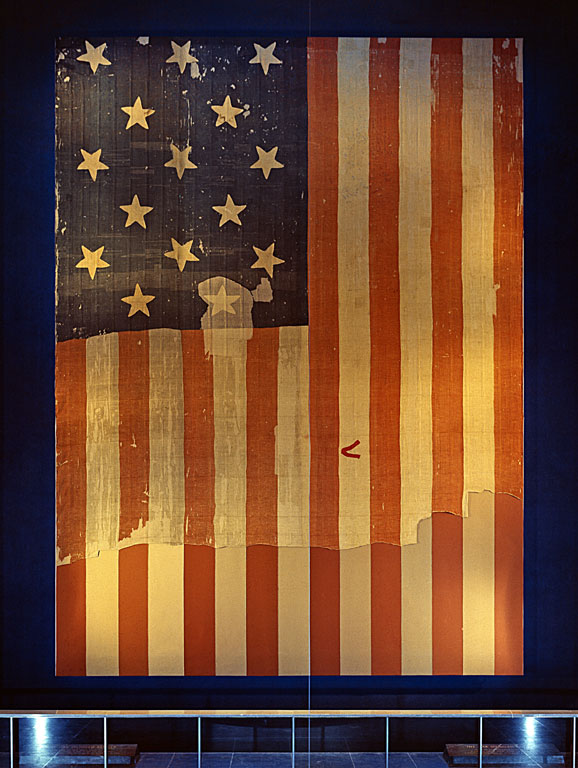
The 30 by 34 foot Star Spangled Banner Flag that inspired the lyrics below when it flew above Fort McHenry in the 1814 Battle of Baltimore. It is on permanent display in the Smithsonian National Museum of American History.

Please allow me, courtesy of Wikipedia, to begin with all of the stanzas of Francis Scott Key’s Star-Spangled Banner, including the fifth stanza added by Oliver Wendell Holmes Senior in 1861. For I believe that these lines most truly express what unites US:

“O say can you see, by the dawn’s early light,
What so proudly we hailed at the twilight’s last gleaming,
Whose broad stripes and bright stars through the perilous fight,
O’er the ramparts we watched, were so gallantly streaming?
And the rocket’s red glare, the bombs bursting in air,
Gave proof through the night that our flag was still there;
O say does that star-spangled banner yet wave
O’er the land of the free and the home of the brave?

On the shore dimly seen through the mists of the deep,
Where the foe’s haughty host in dread silence reposes,
What is that which the breeze, o’er the towering steep,
As it fitfully blows, half conceals, half discloses?
Now it catches the gleam of the morning’s first beam,
In full glory reflected now shines in the stream:
‘Tis the star-spangled banner, O long may it wave
O’er the land of the free and the home of the brave.

And where is that band who so vauntingly swore
That the havoc of war and the battle’s confusion,
A home and a country, should leave us no more?
Their blood has washed out their foul footsteps’ pollution.
No refuge could save the hireling and slave
From the terror of flight, or the gloom of the grave:
And the star-spangled banner in triumph doth wave,
O’er the land of the free and the home of the brave.

O thus be it ever, when freemen shall stand
Between their loved homes and the war’s desolation.
Blest with vict’ry and peace, may the Heav’n rescued land
Praise the Power that hath made and preserved us a nation!
Then conquer we must, when our cause it is just,
And this be our motto: ‘In God is our trust.’
And the star-spangled banner in triumph shall wave
O’er the land of the free and the home of the brave!

When our land is illumined with Liberty’s smile,
If a foe from within strike a blow at her glory,
Down, down with the traitor that dares to defile
The flag of her stars and the page of her story!
By the millions unchained, who our birthright have gained,
We will keep her bright blazon forever unstained!
And the Star-Spangled Banner in triumph shall wave
While the land of the free is the home of the brave.”
Would you be surprised if any American would object to anything said in the Star Spangled Banner? The song has conveyed our bravery, our love for liberty, and that we acknowledge our protection by God. Well, yes, that last part about God, at least three out of ten Americans today would say “Whoa!” to that one. In fact each of the two political parties in the US are led by people who claim that God is on their side, and they’re nowadays likely to claim that the opposition is not aligned with the Almighty. So far, then, we are divided by our disagreement as to whether God is on the side of Republicans or Democrats.

How silly. Any Being worthy of being called God would not choose sides among Her children. And if my Theory of the Conscious Universe happens to be right, we are made out of Her, and represent Her, with what we think of as our self actually being The One Self, combining all opposites, all deviations, all avatars, all of us.

But from the standpoint of this article, so far, we have identified one factor (God) which has been used divisively lately. Let’s continue the analysis.

Freedom, Liberty, Individual Agency without unnatural restrictions. We all want that, right? I don’t hear any objections. Freedom is something we all want.

Willingness to fight and die for what we believe in. Troublemaking as it is, yes, it is in the core of our being, here on the continent that revolted from the old ways. We have always been fighters. Balancing that with also being better diplomats – in the class with Franklin and Jefferson – might be a good thing.

In the era of Locke and Montesquieu, imagining what the optimal organization of government might be, Jefferson and other Founding Fathers became impressed by the way the Native Americans governed themselves via a “stacked-government” model, giving tribes autonomy yet coming together as a federation of tribes for accomplishing larger missions, such as increasing sediment yields to the Delaware River basin. This idea became known as federalism. We still practice it today. We fought a Civil War over it, and that system’s inability to agree on a slavery policy. States’ Rights are a second factor dividing us. Or is it?

There is no question as to the power of the States today. It is an established fact. So long as there is true unrigged, unobstructed, unweighted voting by all, if someone does not like what the voters decided, they can move to another State. Although there is talk of changing the Constitution, States’ Rights are in no visible danger, so far as I can see. If it’s a factor that seems to be dividing us, we ought to agree publicly that we are not actually divided on that one point. What we may actually be disagreeing about are the ways in which free voting needs to be protected for the benefit of all citizens.

And we might also benefit from similarly scrutinizing what else appears to be dividing us, because in many cases we shall emerge from the process with a more specific set of disagreements, smaller and more controllable than the general animosity would suggest. If we can speak civilly to one another about such matters again I predict we will find that there is much less disagreement on specifics, and once we do that, our minds can creatively collaborate to find a synthesis in those areas of true dispute. We owe it to ourselves to attempt this and to doggedly pursue the process, point by point, until at least the hypnotized part of the divisiveness goes away.

Oliver Wendell Holmes Junior, son of the poet and physician of the same name who added the final stanza to the National Anthem, the son being the most famous of the Supreme Court Justices, and an intellectual thought leader who, a Republican, influenced progressives such as FDR. His 1881 Common Law is the history and logic of how the law evolved. According to History.com:

“He emphasized both that the ‘life of the law has not been logic: it has been experience’ and that the law develops according to the ‘felt necessities of the time’ rather than according to any set of deductive premises.”

Thus doth the Law rest upon “the felt necessities of the time”.

That would be worrisome if our necessities are always changing. But they are always the same, or they wouldn’t be necessities in the first place. We shall always want our freedom, and most of us would want our equality. But there that equality thing – that’s a third divisive item (after God and States’ Rights). Or is it?

It’s possible to think “I myself must be treated like an equal by everyone” and at the same time say “but I work hard for my money, and I don’t want one of my equals to be a person who gets a handout out of the money I pay for taxes”.

Transfer payments are definitely a divisive factor. I first wrote about that in my 20s, suggesting that we invest in developing people with our transfer payments, with an eye toward gradually reducing the need for transfer payments.

If not the best answer, at least it suggests that we might get creative.

Those divisiveness factors we’re reviewing – God, liberty, equality, free speech (the latter item covered below) – are not meant to be an exhaustive list, so please think further and identify other causes of division.

Please do use this method of speaking civilly and peeling the onion to find where true disagreement lies (if it is there at all) and to try for solution directions to take together.

So far, the list has been pretty rational and cognitive. How about that larger part of ourselves? The subconscious, emotional, non-rational part that makes 95% of our decisions, according to Harvard don Gerald Zaltman?

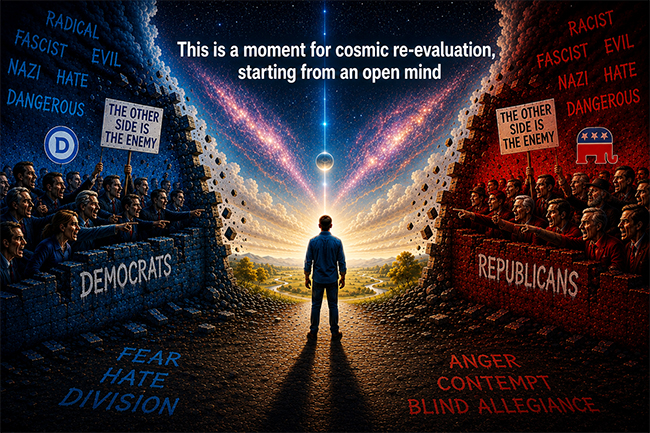
The possibly biggest divisiveness factor is not a rational thing. It’s more of an animal-instinctive feeling: “These people are not for me at all.” Right now, that’s how we are sorting ourselves into these two groups (Red and Blue), while the rest of us are trying to bring us all back to the table as citizens of the USA.

Metacognition, which humans apparently do better than the other species, although the jury’s still out, is the art and science of watching what is going on in your own mind and inner theatre of feelings, and understanding the why of it. Here’s how metacognition applies to this situation.

We can actually turn the tide on this divisiveness thing by catching and neutering that automatic response of being repelled by a perceived “Other” group. Hold that automatic response with your will and your mind, like a dangerous squirming toad, and inspect it. What did it feel like? Who did it remind you of? When in life did you start to feel that way?

Don’t accept the feeling of being repelled by a person. It’s more of an alarm signal about you than about that other person. Meditate on what it is in you. In less than a week, you shall definitely have a deep intuition about it.

Who said, “I do not like that man. I must get to know him better.”

It was Abraham Lincoln.

We are all in this together and are collectively losing the game. This shocks game theorists. Why would there be just losers? How could that even be?

The weaponry stacked around is certainly enough to make this a dead planet.

Wasn’t WWII bad enough?

We have to accept each other.

We need to be able to cooperate or none of us may survive.

Give up the “bad guy” idea. (Don’t stop incarcerating criminals convicted by due process of law, whether seditionists, murderers, rapists, or whatever. No one should be exempt from such accountability to justice. It’s more useful to think of them as being psychologically diseased/unbalanced than as “bad guys”. The “bad guys” construct triggers autonomic emotional reactions that are pragmatically obstructive to solution finding. We can think more effectively and creatively without that construct.)

Then we can easily talk the rest of this out so that each tribe can be satisfied. But not if we can’t talk to each other without negative emotion flaring up. Master your selves. Talk civilly and respectfully to all.

Free Speech, the Right guaranteed by the First Amendment to the Constitution, became a divisive factor when the enormous megaphone called the Internet happened.

We felt that we were given license to say anything we pleased, true or false, whether it would hurt someone else’s feelings or not. Not all of us activated that. But many tens of millions got into it as if they had been holding it in since kindergarten. And they are now a bit stuck in it. If they try to back out of it too gracelessly they will be attacked from all sides.

The people are still walking around in rage. Stop avoiding them. They need help. Have infinite patience. They will be blessed by it. You will be blessed by it. Use this post as a study guide to prepare for such meetings with your own ideas about what are the divisive factors and how can we peel each one away like an onion so that we can see reality together, agree on what we see at that moment, or do further research on any areas in which we cannot agree. But always civilly in recognition of the seriousness of the situation in which we had all better be on one side, the side of the human race, or we are quite literally doomed.

Love to all,
Bill


Visit Us On FacebookVisit Us On TwitterVisit Us On LinkedinVisit Us On Youtube

Regaining Tolerable Differences in Opinion

Welcome to this week’s Bill Harvey Blog
Created February 26, 2026

Last week, we began this discussion of finding things we can agree upon across the political spectrum. It is the issue of the Age, and so obviously not soluble in one quick blogpost. In this post, we intend to dive more deeply into finding the pragmatic solution steps.

Step one in any solution process is a situation analysis. In this case, what is wrong, and how did it get broken?

The Ideological Brain: A Radical Science of Flexible Thinking, authored by political neuroscientist Leor Zmigrod, is a good read which came out in 2025 and touches upon many of the subjects about ways to use the mind, which I come at from a different angle in my writings, and which Jerry Zaltman writes about in his books. Where Jerry uses terms such as “open mind”, and I use terms such as “hasty closure” and “dichotomania”, Leor uses “rigidity” and “dogmatic”, but we are all talking about the same things: different ways of using our minds.

Leor brings both genetics and epigenetics into the picture in reporting meta-analyses of neuroscience experiments conducted all over the world which have found that there are structural brain differences which account for the tendency to not update one’s thinking based on new evidence, but to stick with doctrine that explains everything in life, i.e. some ideology, a narrative designed to be logically exhaustive and prescriptive about how to live one’s life.

Darwin taught us nothing if not that survival depends upon the ability to adapt to changing environments. But if one is in an ideological state of mind, this adaptability is crippled.

My friend Joel Tucciarone uses the phrase “frozen perceptions”.

Leor points out that the structural brain differences do not necessarily precede the adoption or the conditioning into belief in an ideology, and that brain plasticity enables a person to overcome and change the brain structure by acts of free will. There is not a deterministic no-exit mind trap; we can choose to use our minds in unfamiliar ways and stick to it and free ourselves. However, she also points out that there is a tendency for a person who is locked into one specific ideology, if he or she gives that up, to fall into a different ideology. She hypothesizes that the regimentation and the comfort of not having to think about the complexity of existence seduce many of us to choose a prepackaged ideology. This is also my hypothesis, that the stress of Acceleritis causes many of us to subscribe to an existing comprehensive set of beliefs as opposed to making our own decisions about the perennial largest philosophical questions.

Unable to bear ambiguity, many will seek hasty closure in an ideology. Better to be like a scientist, leaving closure open until there is replicated proof.

When I was a child, I became aware of a number of political and religious ideologies: Fascism (WWII was still going on), Capitalism, Communism, Democrats, Republicans, Jews, Christians, Hindus, Muslims, et al, each with its own logically comprehensive beliefs and action rules. I intuitively felt no resonance with any of them; they all seemed limiting to me.

So ideology has been going on a long time, for thousands of years (Leor traces the word itself to July 22, 1794, I won’t be a spoiler, enjoy her beautiful writing), people have wedded themselves firmly to belief systems. But today the matter has come to a head in a way that seems apocalyptic even compared to the American Civil War and WWII, because of the ferocity of the unforgiving anger and loathing between the most extreme of the right and left political ideologues in the USA.

Leor again comes to the rescue here by reporting well-replicated experiments which indicate that ideological locked-in thinking spikes during periods of fear and threat. It would appear from the evidence that the bitterness and implacability of the ideological clash today is explained by the many frightening existential threats that have come together at this point in history. Thermonuclear, biological, chemical, psychological weapons of mass destruction, environmental collapse, risk of economic breakdown because of fiat currencies and gargantuan debt buildups, devastation of trust, mental emotional Acceleritis overwhelm, AI, and the absence of a plausible scientific spiritual worldview. If Leor is right about fear being a cause of ideological exacerbation, then this doomsday litany is among the unmooring terrors of the present epoch, which arguably explain why the left and right have morphed from friendly competitors into vicious hated enemies.

In my philosophy with which readers of this blog are familiar, fear itself is an alarm that wakens us to think creatively about some problem and to solve it, which is best done in a mindset of resolute courage and stoic resilience, i.e., turn off the fear alarm before you start to think about the solution. Accept the possibility of the negative outcome and see how you will handle it if it comes. Then, turn to creative thinking to prevent the undesirable outcome.

Instead of doing these things, our two political poles are blaming each other, besmirching each other, and justifying their own righteousness. I’m not saying that both extremes are equally at fault; I’m saying that is not the useful handle on the solution. Whoever has done whatever wrongs will eventually be sorted out and penalties applied to criminal acts where appropriate. In the meantime, a general amnesty is necessary. In the end, most of us will be found innocent, and the time for forgiveness of the masses is at hand.

“To err is human, to forgive is divine.” This was written by Alexander Pope in 1711 and has roots in the Bible:

  • “To Err is Human”: Romans 3:23 (“For all have sinned and fall short of the glory of God”) acknowledges that making mistakes/sinning is a part of fallen human nature.
  • “To Forgive is Divine”: Ephesians 4:32 and Colossians 3:13 encourage Christians to forgive others just as God, through Christ, has forgiven them.
  • God’s Command: Jesus emphasizes the importance of forgiveness in Matthew 6:14, stating that if you forgive others, your heavenly Father will also forgive you.

In my own humble philosophy, we each are an avatar of the One Consciousness, and have been given free will in order, across incarnations, to learn for ourselves the right ways to be, and this learning will be driven by errors we make. Error is inherent in the cosmic video game the One is playing. Therefore, forgiveness is implicit in the whole setup.

By forgiveness, I do not mean to say that those who continue to act against our interests should be empowered to continue doing those things to us. I mean that in our hearts we can remove the anger and hatred and replace it with understanding, compassion, empathy, and pragmatic solutions to no longer have to put up with those mistreatments.

Voting is the way in which we can take the most effective action. Communication with our representatives is something we can do every day we feel like it (and is our civic duty), and speaking up constructively without rancor will be more effective than joining in with the yelling. We shall also be able to communicate more effectively if we are not taking an accusatory tone, the listener, if he/she is not being blamed, will have a more open mind. If we take the love out of our voice, the people we most need to listen will not listen and will make sure to black us out of their consciousness.

Takeaways:

  • Open Closure
  • Adaptive Optimization Synthesizing Idealism and Pragmatism
  • Agility, Resilience, Adaptability
  • Ability to reset one’s mind (finding the hidden switch)

Love to all,
Bill


POWERFUL MIND 12 Simple Keys
Available Now
POWERFUL MIND 12 Simple Keys by Bill Harvey

SPECIAL EDITION: An Eye for An Eye

Created April 15, 2024
Special Edition

The Iranian tactic has an ancient basis in the respective bibles of the “People of The Book.” As a species we have known for a long time the disastrous consequences of escalation.

This demo by Teheran starts a new era in geopolitik.

It was prophesied in my 2022 novel Pandemonium: Live To All Devices. Not to make more of a spoiler than necessary, a virtual reality television star leads a coalition to prevent escalation, sort of a global NATO, and it works by careful judgment of the optimal degree of retaliation (e.g. page 457).

Israel will now know that unmanned missile and drone attacks are the preferred mode of making “just enough” reparations. Next time there is an October 7th type action. But can anyone afford one more such action?

Does this new context offer an increased feeling of safety, that forms of mischief which have been vaguely tolerated in the past, fighting terrorists but not the people that sent them, those mischief forms are now off the table? Would anyone blame Israel for using these same air missile and drone tactics on Iran if there were to be one further provocation?

Should not everyone take the moment to back away from provocations they are causing right now? Start quietly winding them down?

We have reached a moment that was easy to see coming. For the past 8 years and even longer, governments around the world have been continuing to rattle sabers and appear as strong as possible to one another, as if we were still using TNT, as if bioweapons and cyberweapons and thermonuclear weapons and propaganda weapons were still back at the primitive WWII level.

A bunch of macho men in a life raft, each loaded to the gills with all sorts of exotic and superpowerful weaponry, goading each other in a dominance drill that goes on for a seeming eternity, until one of them accidentally shoves another due to a sudden ocean swell, and there is an explosive bloody free-for-all, which they all call off when they see they are all going to die.

That’s where we are folks.

Time to bring cooperation and competition back in balance.

We have been unbalanced in the competition direction as far back as we can see in written history.

The Greeks and the Romans made slightly better use of cooperation for a time, and rose as empires as a result.

These United States have until recently (with the exception of the Civil War) shown an amazing degree of cooperation. The Native American tribes had been the inspiration for the Federalist philosophy of government which the Founders adopted. This gave us the States.

If we are – the whole universe is – a single consciousness at play, this would explain the reason why cooperation works so well. It’s natural to our nature.

Nature also shows us competition, for mates, for land, for food.

We are hard wired and soft wired for both cooperation and competition.

Hard wired meaning in our physical structure including nervous system. Soft wired meaning programmed by our experiences.

Perhaps we were looking to the animals as our role models when we started off on this competition kick, where cooperation is less to be seen. And yet we see incredible cooperation among cetaceans, fish, birds, certain insects. In WWII we saw incredible cooperation by the Allies. We saw it on April 13th (EDT) when so many nations pitched in to work against an attack.

The U.S. Congress which has been commandeered and far from successfully achieving actual cooperation, is not going to play deaf to this wakeup call “courtesy” of Iran. If the public does not see a change in behavior it will demand the immediate removal of obstructors, those who show no sincere intention to legislate for the good of the public. I think we will see improvement before it goes that far. The moment calls for showing that one is alert to some need to change something. And that it cannot be delayed, procrastination rarely helps in a fire.

No more nonsense.

My Best to all,
Bill

We All Need Optimal Competition to Supplant the Unhealthy Kind

Created February 17, 2023

Welcome to this week’s Bill Harvey Blog.

The optimal use of competition is to set it up to be good-natured. As if in a debating game. The way the Founders of the Constitution thought about it. Without fierce fear of failure, megalomaniacal attachment to power and political money, without hatred, gaming the system, or violence. The Founders knew there would inevitably always be political arguments along the way, but felt confident that with the checks and balances and good will, we would be able to work things out.

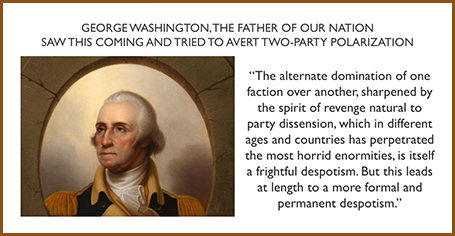
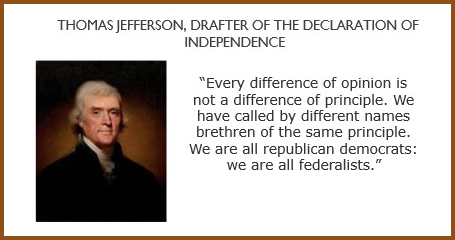
The Constitution itself never mentioned political parties. Jefferson and Washington both warned against the rise of political parties in America. They had seen what happened with the Tories and Whigs in Merrie Olde England. Wigs on the green. At the time, in the American Colonies, being the government was just a particularly hard and risky job without a lot of perks. Like being anything in the Colonies at that time.

In any situation where the lust for winning and the fear of losing has become obsessive, human effectiveness drops sharply. Different brain processes take over. Yerkes-Dodson experiments and later work by others proved that when we care too much about an outcome, we reduce our own power to get that outcome.

Too many of the human beings involved in the process of governing us are now showing their worst sides most of the time because they are so ignobly and obsessively motivated. I say ignobly because a public servant worth his or her or their title serves the public regardless of personal outcomes for themselves. They do the necessary for the good of the people. They keep their solemn Oath. Such were the Founders. If we had them today none of this would be happening. Which is not to say that all of our public servants today are ignoble. But the ignoble ones are showing off blatantly because they have used unfair tactics and are still getting away with it, so they appear at the moment to have the upper hand over the noble ones. 

What if anything can we do about the present disappointment many of us feel when we think about our beloved nation with its high ideals? Firstly, we ought not vote for ignobles. Secondly, smaller degrees of change are easier to achieve, so let’s see what can be done to moderate the behavior of those in government. They should be held to a higher standard. Lying, hate talk, attacking the other party, extolling one’s own party, damning the proposed solutions put forth by others without offering any solutions of one’s own, openly gaming the system (gerrymandering, filibustering, appointing of politically motivated judges) so as to gain and keep power, accepting inappropriate monetary rewards, there are specific guidelines which could be put forth as a new Code Of Conduct Standard for the country’s government decision makers at Federal, State, and even local levels.

That is only a surface change but it will have inner feedback loops that will help people break their conditioning. We’ve been all been conditioned and it’s hard but not impossible to break conditioning. Our conditioning began early and we had nothing to compare it to so we took it all for granted. Later we felt in our comfort zone to stay within the herd of people who received similar conditioning to ourselves, and we might not have even been conscious of doing it. This conditioning resides within brain neurons created by our experiences and affects us strongly. The repetition of reinforcement over decades enforces a self-image which is too much made up of what other people think and too little created by our own fully reconsidered clear-eyed contemplation.

In order for the governments of the world to perform optimally, and nations to be led to peaceful coexistence and compassionate cooperation, authoritarian (will take longer) and democracy/republic leaders need to evolve themselves by knowing themselves better, and by reinvigorating their true individuality. Becoming liberated from conditioned intense attachment to money and power and replacing those drives with loftier inspiration to make a better happier world. We all need this but we all need it to happen for world leaders as much as we need it for ourselves. Without inner changes in all of us, especially those who are supposed to lead us, the species might not make it in time to avert the many ticking timebombs our overwhelmed minds have created.  

Witness the recent slide of a perfectly humane and smart American party into what it is now. But the Republicans I know are nothing like that. Those in highest offices may be acting crazy, but the ground truth is quite different, very few Republicans I know who are not in the government are anything like crazy. It’s not the people; it’s a relative handful, a few thousand mis-motivated people that have arrogated unto themselves a great excess of power already, and they have made clear that they are not at all interested in keeping their oaths to protect the American Constitution. This is a domestic threat to our way of life. It’s un-American. It’s a return to what we sought to replace with Americanism. Because the atavistic governing style staging a comeback runs on bribes, maybe we should call it Bribalism.

The Business of the United States Is Business 

Republican legislators when acting sanely (before the extreme attachment to personal outcome hypnotized them) were pro-business before. Now their core is more the lesser educated, their concern for businesses could be manifesting as good advice and programs for small businesses in this era in which small businesses are arising more rapidly due to the internet. Meanwhile, businesses have transcended the pure profit motive for enlightened self-interest (buzzword: Purpose), which empowers them to take up good causes and aim to make people’s lives better. 

Although this is authentic to US business today, the party which used to cleave to business is not exactly doing that kind of thing as much. Now the GOP is saying only what will hold together the tens of millions of people who keep it in power. This is analogous to milking a brand that is on the decline: it will not avert the decline, but in the short term before that decline is finished, “get as much out of it as you can.” It would be far better to avert the decline by returning to its original brand identity as the Party of Lincoln, the party of business especially small businesses, the party demanding proofs and safeguards from those bringing progressive proposals, the party which completes a healthy optimal competition with the more change-oriented party.    

Republicans rise up to take responsibility for your party. You are true Americans; there are a few thousand people terrorizing the country and they unfortunately turn out to be all too many of the people we together elected, and unluckily for you most of them right now are of your party – but not of your mind, nor of your character. You have to rise up collectively to peacefully take back control of your party and bring it back to the center. No one else can do it but you. Step up, step forward, take responsibility. It’s the right thing to do.

Love to all, 

Bill

PS – How to take advantage of the “Yerkes-Dodson Law” (and more) to improve your own performance: https://www.humaneffectivenessinstitute.org/observerness/ 

PPS – I’m not saying bribes are limited to one party. Remember, I’m an Independent. As I’ve written here many times, I see fixed going-in conditions such as progressivism or conservatism to be biases, things which distort objective judgment and obscure and confuse objectivity. Biases block Observer state and Flow state.