Author Archives: Christine Niver

We Are Being Tested

Welcome to this week’s Bill Harvey Blog.
July 17, 2026

We are being tested the way Job was tested.

It was a setup. Starting way back in the 1960s. As early as the 1960s, as documented by Yoni Applebaum in this month’s issue of The Atlantic, the way that American history was taught in schools bifurcated into two warring narratives. One emphasized the American ideals of what we have always aspired to be, and have generally been, to our own people and in our dealings around the world. The other narrative told it like it was, warts and all, not pulling punches about our imperfections, even as we were getting better year after year.

By 2001, when George W. Bush and Congress created No Child Left Behind, they dodged the bullet on setting a single standard for the teaching of history. The unintended net effect was to virtually mute the teaching of American idealism in schools for the past quarter of a Century. Although the trend toward subordinating American history as a school subject started back in the 1960s.

Can we see any effects that might be traceable to this change in the way schools have taught about what America means and is?

An AP-NORC Center for Public Affairs Research poll found that about two-thirds (67%) of U.S. adults say a democratically elected government is highly important to the nation’s identity. Conversely, this means roughly 33% of Americans do not see it as extremely or very important—a significant jump from 2021, when 80% viewed it as highly vital.*

The Generational Divide: Apathy or detachment is heavily concentrated among younger generations. Only 50% of Americans under 30 believe democracy is a key element of the U.S.’s identity, compared to 81% of those ages 60 and older.

Rather than outright hostility toward democracy, experts note that this detachment often stems from a growing belief among everyday citizens—especially younger generations—that the political system is fundamentally broken, corrupt, or simply failing to address their day-to-day problems.

If they had been taught the way the Old Guard had been taught, some of our current problems might never have been possible.

I’m not preaching in favor of whitewashing, but in favor of telling not only all the good and bad details, but also the philosophical drivers for why there is a USA designed the way it is. The ideals, the values, the logic, and reasoning based on deep studies of pre-American history and the types of governing systems there had been and how they fared. The Founders didn’t just make it up. They never claimed that they had received the Light from Above. They had assimilated Enlightenment philosophies and had studied history going as far back as it goes. They debated for 17 years from 1774 to 1791. 17 years to get it right.

And get it right they did. No republic has ever lasted as long as we have.

But loopholes existed. And things that The Founders had warned us against, like the two-party system happened despite their warnings. And the things that Washington said would happen if we went to a two-party system, have now happened big time. The people who felt that their Party was shrinking away found a leader who found those loopholes and has leveraged them. At a time when the schools had pressed the pause button for too long on reminding us of our ideals.

Even when idealism was being taught in schools, we have always, as citizens, not been 100% engaged. Other interests occupied our attention, for most of us, and only a fraction of us (usually around 40%) voted in elections. Socrates, who was all for having a republic, felt that it was a citizen’s duty to serve that republic, might have been shocked to see how lackadaisical the majority of Americans have always been about chipping in some time to serve in the role of engaged citizens.

In the 2024 US presidential election, approximately 85.9 million eligible voters did not cast a ballot. While 2024 tied the highest voter turnout rate in over a century (tied with 1960), the 85.9 million people who sat it out actually outnumbered the total votes cast for either major candidate.

This goes back to the feeling that none of us can do anything to change the inept, corrupt, and distracted from the needs of The People system as it now is. People who don’t vote feel that if they did vote, it would make no difference. As Simon & Garfunkel wrote and sang, “Going to the candidates’ debate, Laugh about it, shout about it, When you’ve got to choose, Every way you look at it, you lose.”

So, we’ve been set up to be tested, prepared by a quarter century of not teaching our own brand of American pragmatic idealism in schools, supported by the most successful governance system in world history and spoiled by it so as to take its benefits and our rights for granted without needing to lift a finger or even vote. And now, if we fail to stand up and be counted, and to vote against the removal of our rights to freedom of speech and assembly, cynicism and low meanness and corruption more blatant than ever before by an order of magnitude, the test will result in a longer period of learning to pass it.

That’s the way that the Universe works. It teaches us things. It first tries teaching it to us in ways that are fun. If we don’t get it, it teaches us with a few hard knocks. If we still don’t get it, the knocks get harder and harder the longer we cling to obstinacy and refusal to open our minds and eyes and see what the Universe is trying to tell us.

As the Father of Our Nation warned us, we might be obstinate because of the two-party system and what it has done to make us feel that the political party we cling to is vital to our personal identity. It is not. Our personal identity is unique in the Universe; it has nothing to do with which teams we root for.

Pass the test. Help us all pass the test. Plan to vote no matter what. Show what you’re made of.

And then when we have retaken our country and are again recognized as the seat of all governing power, “We, The People,” we have some loopholes to fix. In a moment of forgiveness, sometime in the future, we will thank the folks who called those loopholes to our attention so we could fix them before some more talented, more professional, more intelligent baddies come along and find them.

*However, according to a PBS News/NPR/Marist poll released in July 2026, the overwhelming majority of Americans are deeply concerned:

  • 82% of Americans believe that the future of American democracy faces a serious threat.
  • This worry spans across the political spectrum: 74% of Republicans, 83% of independents, and 91% of Democrats share this view.

In that same poll, it was found that 84% of us feel that we know too little about history.

My best wishes to all,
Bill

The Human Heritage: Word Pollution

Welcome to this week’s Bill Harvey Blog.
July 9, 2026

This is the second in the new MIND MAGIC / MIND EXPERIMENTS book excerpt series. The first one, Release Your Self from the Hypnotic Power of Words, was published on June 5.


Humans come into the world. We find out certain things: for example, we find out that fire burns us. This “finding out” we call knowing: when someone has a true picture in his or her mind— “true” meaning that the picture cor­responds to the external reality—we call this knowing. So, if we have a picture in our mind of fire burning our hand, we say that we know that fire can burn us.

So far, language does not yet exist. We can know without language by holding true images in our mind. There is no “believing.” “Believing” comes into the picture when lan­guage is invented.

With language, one person who knows something can pass on this knowledge to another person who has not yet discovered it for themself. The latter person, in accepting the former’s knowledge as true, “believes” it. As we all now know, this “believing” often leads to the holding of untrue pictures in people’s minds.

The cure is to cut down on believing—tend to only hold pictures in one’s mind of the things one has seen oneself.

Belief was never much of an issue before words.

Belief = be lief = be for me. I believe him = he be’s for me on that. He was there. He saw it. He sees it for me. He sees it—I see him see it.

Cosmic humor: Most belief is founded on the form, not the content, of the words believed in.

Disidentifying with the feeling of belief

At almost every instant, you are likely to experience the feeling about a given postulate: “It is so.” Look for that feeling, and when it arises, remind yourself: “It may not be so.” Be willing to act based on your judgment as to whether something is more likely to be true or to be not true; but do not believe that it is either true or not true. In this way, belief is unnecessary to action.

Be especially wary of the feeling of belief at times when you have a thought and then do not contradict it. Simply, the experience of non-contradiction suggests to the belief program that it energizes itself. Thus, you must guard against the tendency to believe any thought you generate. This can best be done by remembering to say to yourself (but not in words), “It may not be so” in response to every thought.

TRUTH - INTELLECTUALLY - ACTIONABLY

The definition of Truth at the intellectual level is what can be made to sound reasonable based on the words you use. Intellectual reason can find some truth and some falsity in every statement, depending upon how it is interpreted.

The definition of Truth at the action level is what works when you actually try it in reality . . . i.e., what the uni­verse reinforces.

We need to make action decisions each second. We need to make intellectual statements a few times a day. The two are usually unrelated.

Few people living in the Scientific Age have realized that the Scientific Method can be applied to Life . . .

Mind Experiment

What do you believe?

List your beliefs on one or several sheets of paper using only the left-hand side of the page. (Or on your laptop or tablet if you prefer. We recommend paper, so you don’t need to bother with formatting, auto-correct, etc.) Use question marks next to any beliefs you’re not sure you fully believe.

If you’re not sure where to start, you might start with beliefs about God, an afterlife, the purpose of life, and what is good and what is bad.

Where did they come from? Why do (did)

I believe that?

In this game, one remem­bers where each belief came from.

Easy if you take them slowly, one at a time.

No longer needing to have beliefs

In this stage, one faces the situation of no longer really having any beliefs, yet realizes that this is true freedom to learn. Often accompanied by brief ecstasy.

It may not be so.

To do this experiment, simply pick a period of time, and in that time watch your thoughts, remembering to realize that each thought might be right or it might be wrong.

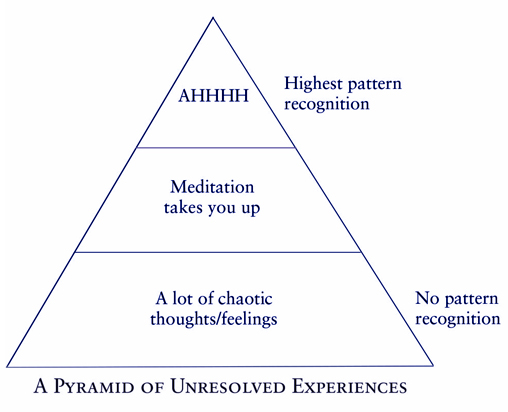
This is one of the most universal forms of meditation.

The way it usually goes, you keep getting sucked into iden­tifying with some thought or another and forget to doubt it—then catch yourself and back out of auto-agreement with the thought.

Over time, you begin to see how your idea-generation process, your conviction-decision process, and your other mental processes work. Then you will have control over these processes rather than being controlled by them.

Love to all,
Bill

Starting Over

Welcome to this week’s Bill Harvey Blog
Created June 26, 2026

It’s a gloriously beautiful day in the future. The dark days of endless hate and hopelessness have finally ended. The United States has voted in a competent, pragmatic President who is inspired by the spirit of America and its dream for the world. The American dream of the preciousness of each human life and the dignity of every individual.

There is a lot of rebuilding and repair to do. Augean stables abound.

Rather than being overwhelmed by the scope of the task, Americans who begin this resurrection will feel grateful to be the lucky generations whose timing has granted them this historic honor. “We are the new Washingtons, Franklins, Jeffersons, Hamiltons, Lincolns,” they dare to realize with awe. “Completing their work.”

Starting over. A feeling of enormous creative license, freedom to paint on a grand scale canvas. And yet an imperative to start from and hew to originalism, the original Constitution, its exact words and meanings.

Even though that Constitution did not protect us from falling away from The American Dream into an American Nightmare.

That is where the creativity comes in. How do we Amend the Constitution so that it can never happen again?

Finally, a social media conversation worth having. A collaboration, a wikimedia, crowdsourcing at the highest level. With guard rails and guidelines contributed by experts in Constitutional Law.

Something better to do with the amazing media we have created.

A sense of common purpose.

Starting over is a lovely feeling.

What sorts of things will be up for discussion? What are some of the different ways things can turn out?

In one scenario, there may be a ban on the two-party system.

The idea of political parties is never mentioned in the Declaration of Independence nor in the Constitution.

In fact, many of the Founding Fathers were deeply suspicious of them. They referred to political parties as “factions” and viewed them as a threat to national unity.

For instance, George Washington famously used his 1796 Farewell Address to warn Americans against the dangers of political parties, arguing that they would lead to “alternate domination” and distract the government from its duties. Similarly, James Madison wrote extensively in Federalist No. 10 about how to control the negative effects of factions.

George Washington

Thomas Jefferson

The landmark political science book Partisan Hearts and Minds: Political Parties and the Social Identities of Voters by Green, Palmquist, and Schickler argues against the common political science theory that political party affiliation is a rational, calculated choice based on policy. Instead, it’s a deep-seated social identity, much like religious or ethnic alignments. People adopt a partisan identity early in adulthood. This identity acts as a perceptual lens that filters all future political information. Major events like recessions or scandals rarely shatter a voter’s core party identity.

A social identity does not have the same psychological status as motivational drives; it is more like a mask that is worn, not the inner urgings which cause all of our behavior. We stick to our early self-classification as Democrats or Republicans because otherwise we feel a loss of identity and as if we no longer live within the safety and support of a large group. All of this goes on below the level of our conscious minds. This is why we can be rabble-roused and manipulated to hate each other. If our conscious minds were in control, we would not let that happen.

When the reconstruction comes, there may no longer be political parties. The first new President may be an Independent. This was never thought possible, but today we see great erosion in the images of both parties. Americans want a real change and this might not be possible with the current two parties.

How do we stop money from controlling politics?

This is really a media question.

If there were a foolproof mechanism for identifying candidates willing to serve and who have proven by their actions to be the kinds of people that could possibly serve us well, the media exposure of those candidates could be provided for free, mandated by law. True, this would reduce advertising revenues by about 3%, but perhaps that would be worth the cost.

One way or another, in the reconstruction, we have to stop the buying of elections by the amount of money raised for advertising.

Neither gerrymandering nor filibuster appears in the Constitution. The Electoral College causes gerrymandering, so it is time to switch to popular vote. The two-party system causes filibuster, so in the Second Life of America, we can sweep those out together.

The FCC may have been a bit prissy in regulating American media before there was digital, but on balance, we were better off then than now in terms of what we allow in media.

With AI, it is well within technical capabilities to automatically fact-check everything and to filter out lies and false statements made innocently – or to allow them with the fact check alongside – something for all of us to decide together. Then we get the best of Free Speech without the current Orwellian, Skinnerian conditioning of our whole population’s acceptance of blatant lying as the new way of being we are all supposed to adopt because somehow it is manly?

We who are suffering through the new Dark Ages are entitled to let our hearts and minds have respite by living in the future when we emerge again in the Light.

Starting Over.

Love to all,
Bill


Recapturing the Spiritual Meaning, Awe and Wonder of Life

A recent, wonderful article in The Edge Magazine about my latest book, POWERFUL MIND

Welcome to this week’s Bill Harvey Blog, June 12, 2026

Excerpts from Powerful Mind: 12 Simple Keys – The Human Effectiveness Institute, February 2026

We all have a yearning, subconsciously, to get back to the Garden, to feel that numinous, magical thrill we remember from childhood. We yearn to have that feeling all the time, not just in momentary flashes, such as peak experiences that came out of nowhere on a beach or a mountain or in meditation, where we experienced the certainty of ubiquitous love all around us and throughout our own being.

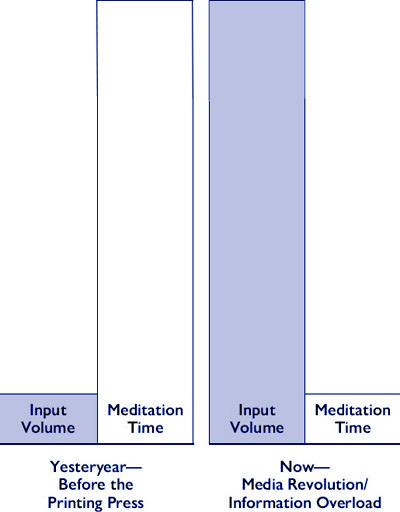
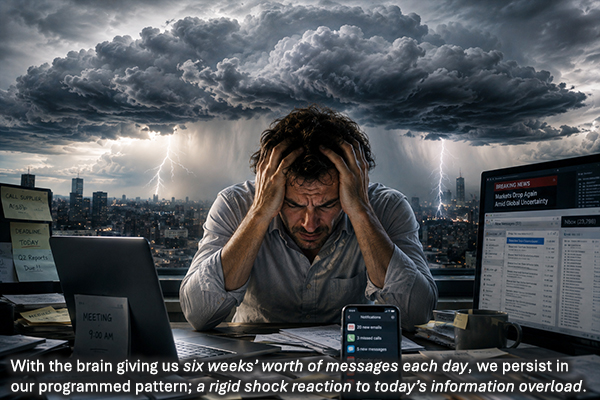
In my book, Mind Magic, I speculated that the amount of information and question-producing stimuli processed daily by the average person has been accelerating since the invention of written language. I surmised that this acceleration causes a mental/emotional state I call the Emergency Oversimplification Procedure (EOP).

In this state of consciousness, questions are set aside, experiences are not assimilated, personal effectiveness is reduced, creativity is blocked, the awe and wonder of life that we felt as children fades away, we subscribe to black-and-white thinking imposed by others, we use prerecorded responses most of the time, and new learning and growth are stifled. We are coping but not mastering life.

We can regain our individuality, solve our problems through focused attention, become happier, and give back more to others. We can accelerate our growth by slowing down and choosing what to do next based on real value.

Recapturing the spiritual meaning, awe and wonder of life

Keep asking the ultimate questions.

Why is there a universe at all? Who am I? Why am I here? What am I doing here?

When we first ask ourselves these questions as children, we are awed. We might experience an oxytocin (the “love hormone”) rush, with the hair at the base of our neck standing up and chills up and down our spine.

Most of us eventually give up on these questions as unanswerable. We don’t see how these ultimate questions relate to our daily lives, but they do. In ways we’re unaware of, we make hidden assumptions about these ultimate questions, leaving us with little motivation to act nobly. So, our lives tend to devolve into quiet desperation (Thoreau).

We come full circle and are reborn by allowing ourselves to return to our childhood perspective of awe and wonder.

As a starting point, let’s consider briefly how Einstein and Wheeler, two of the most advanced and sophisticated scientists of our time, contemplated these questions.

Einstein felt sure that the universe is evidence of an intelligence far greater than our own – an intelligence that our intelligence can learn to understand. This gave Einstein those oxytocin thrills all his life, from childhood through adulthood.

Wheeler postulated that the universe initially existed as probability waves and evolved into consciousness, collapsing them into the matter-energy spacetime universe we all experience. He coined the term “Participatory Anthropic Principle” to mean that we, as consciousness, participate in creating the universe we are a part of.

Both scientists were comfortable assuming that the universe can be thought of and described as one thing, of which we, the observers and co-creators, are intrinsic parts. Philosophers’ and scientists’ acceptance of this is a thread running through the history of thought, going back to long before the Rig Veda in the East and Thales in the West.

When considering the ultimate questions, it helps to begin there.

Visualize the whole universe as one thing.
Every individual of every species
Every idea
Every event
Every moment of time
Every percept
Every lump of matter and energy
All parts of one thing.
– Mind Magic

We may be on the verge of the next great leap in physics: a world where the universe is seen as intelligent, and each of us plays a creatively intrinsic role within that universe.

Whether scientifically validated or not, this worldview would radically change how we relate to one another. Simply keeping an open mind about this possibility will positively impact how people relate to one another.

We once believed in a mythos that awed and inspired us, and many of us still hold on to a piece of that in our religious or spiritual practices – an inclusive sense of idealism. We repeatedly emphasize the importance of keeping an open mind about anything being possible unless and until it is proven otherwise. This open-mindedness allows us to experience awe and wonder alongside logic and reason.

In this existential situation, it’s not unreasonable to converse with God in our minds if we feel inclined to do so. The conscious universe we are all part of is a real possibility; no existing law of science rules it out.

We can reclaim our right to think independently without being swayed by what others, even brilliant scientists, claim to be the truth. We can take back our autonomy. We can do this without invoking faith, wishful thinking, superstition, or belief in anything; we simply need to remember with maximum clarity that nothing has been proven either way yet.

We can utilize our newly developed inner visibility to identify what lifts us and what pulls us down, quickly reducing negative emotions, accepting whatever is happening as reality, and handling it constructively and patiently without getting caught up in it.

Our free will, personal freedom, and unwavering will are our most valuable assets. More important than our negative feelings, our will protects our positive feelings of love, joy, and wonder.

Having fun, such as when we’re engaged in our passion work, boosts our emotional, cognitive, and even physical well-being through effortless and natural body movement. This is the Flow state.

It felt incredibly powerful the first few times I experienced the Flow state as a young child. It seemed I had discovered another level of reality that felt very magical, although I was certain it had a scientific basis.

Whether starting over to lift a bad mood, enjoying the process of creating something in a Flow state, or whatever else we’re doing, the ability to focus our attention and notice what is happening inside and around us helps us reach the highest outcomes, even as we refrain from becoming attached to those outcomes.

Powerful Mind: 12 Simple Keys book by Bill HarveyThe techniques presented in Powerful Mind aim to rekindle the magic of reality and initiate a positive upward spiral in our creativity.

Avoiding our usual habitual responses increases our chances for creativity and learning. We pause and rethink things.

Creativity, by definition, is always somewhat unpredictable. True freedom always exalts creativity.

Embrace the essence of life, such as wonder, awe, the Flow state, and spiritual moments. These peak experiences, as Maslow called them, have always been at the heart of the work of great artists, musicians, thinkers, poets, and others who have made life more beautiful and precious. By remaining open to these experiences, we find that they happen more frequently.

When we shift into the Flow state as a way of life, we transcend the ego, as if the ego had been training wheels that we can now take off. We can now sense and live from our authentic selves, our whole selves, not from the defensive ego but from the joyous muse within us. The muse was with us all along, although it may in reality be the One Self that is the universe, living through us.

Reprinted with permission from the June 2026 issue of The Edge Magazine 

Love to all,
Bill