
Tag Archives: Consciousness

Maximizing the Emotional Fullness of Life

Originally posted July 28, 2011

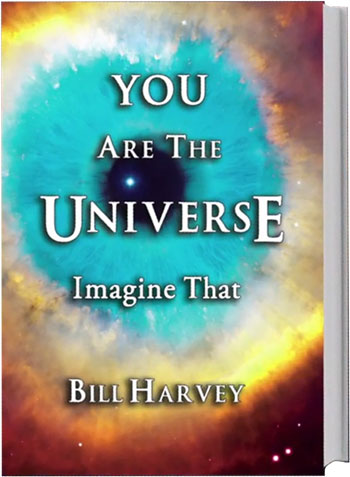
The Theory of the Conscious Universe was the working title of my book, “You Are the Universe: Imagine That”, released in 2014.

Why I am writing about this subject — The Theory of The Conscious Universe?

To explain let me go back a few thousand years to the earliest philosophers — folks like Thales and Epictetus, Socrates and the many other earliest thinkers at the dawn of written language.

Philosophy itself means the love of knowing. “Knowing” itself was one of the first subjects of philosophy — philosophers asked “what is knowing?” and “how is it possible that knowing can exist?” This sub-field of philosophy is called epistemology, as you may know.

Significantly, the root of the word “knowing” is “to see” — you may recall that in an earlier post I pointed out that being primates whose dominant sense is sight, we humans put seeing on a higher pedestal than our other four physical senses.

To me the two most important words that explain why philosophy exists are “wonder” and “awe”. These primal feelings/intuitions are the driver of philosophy, and it was philosophy that gave rise to art and culture, science and technology, morality and religion. First we had those feelings, then intuitions arose to guide us in the right direction to realize unspoken questions and to figure out the best ways of trying to seek answers. Without those feelings where would we be today? Perhaps still in trees.

Growing up I was unwittingly recapitulating the race’s ontogeny — feeling those feelings and being led through the same kinds of intuitions the early philosophers had, even before I could read such works and discover that others had been there long before me.

Freud called these feelings “the oceanic experience” (highly recommended reading: Freud’s Civilization and its Discontents). He postulated that religion came from this sense of something larger than ourselves. Remarkably, there may be nothing larger than our Self, if The Theory of The Conscious Universe is the right explanation of the meaning of life. Our Self may be the only thing that actually exists, and the cause of everything that we experience. In fact this idea is the core of The Theory of The Conscious Universe: all that exists is a single Consciousness, capable of “entertaining” Itself by making virtual copies of Itself, each of which shares the experience of being a self, and may be denied full or partial memory of who it really is. The Original Observer sees through the eyes (or other sensory equipment) of the virtual copies and the copies may or may not be(come) aware of the looker above who is also seeing out their eyes.

So back to my reason for these writings, despite the fact that the daily interests of my dear readers may be focused totally elsewhere. The reason is this: The Theory of The Conscious Universe bears the promise of an ability to restore the magic of life, without the need to take things on faith, engage in superstition, or follow rituals which to some may not feel natural. If it is true that Consciousness is the supreme nature of the Universe, and that each of us is a reflection and a particularization of the Absolute Consciousness in a sacred game making each of us a unique and important experiment in a celestial and divine process, and that this in no way steps away from the scientific method and the disciplines of scientific thinking — then how much emotional fullness might be restored into everyone’s daily lives by recognizing this heritage?

Who among us has not had the experience of lying on your back in the grass looking up at the stars and suddenly feeling elevated, understanding deep down the importance and the excitement of the journey we are all on, and the hugeness of it all and our inextricable connection to it all? But after childhood, how much of this living large feeling makes it into our daily lives? Are we not ground down into pettiness? Do we not still yearn to feel the greatness of our existence each second of every day?

Even before proving that The Theory of The Conscious Universe is true, simply the fact that it could be true is enough to place all religion into a new light, as scientific possibility. In fact it would be unscientific to rule out the core truth of all religion, without having disproven it.

The unity and integrity of having all things inside oneself integrated into a wholeness of purpose, a meaningfulness, makes life emotionally full. In a highly rational culture such as ours has been since the Golden Age of Greece, we subconsciously are unable to get in touch with the greatest feelings we can have, unless we can square those feelings with the rational strictures in our minds. The Theory of The Conscious Universe can do that, without appeal to faith, because it is a scientific explanation for “what is”, which lines up with what we know from Quantum Mechanics (QM) and Relativity, and can explain why it is that time and space exist in our subjective experience and yet are not really there according to these cutting edge sciences.

That’s why I share The Theory of The Conscious Universe. It has restored the magic of life to me, and I wish to share that magical feeling with as many people as possible. Especially you people who have touched my life and to whom I am grateful for what you have taught and given me.

All the best,

Bill

Follow my regular media blog contribution, “In Terms of ROI“ at MediaVillage.com under MediaBizBloggers. Read my latest post.
Consciousness Has Been the Black Hole of Physics

Originally posted July 21, 2011

The Theory of the Conscious Universe was the working title of my book, “You Are the Universe: Imagine That”, released in 2014.

Since Einstein’s famous mind experiments made it possible to think in ways we could never even imagine before, we have learned that Time is Relative to an Observer.

Einstein pictured the Observer riding on a photon of light, and imagined what the Observer would “see” if it were possible to see without the interaction of photons and the eye (which interactions could not occur if one’s eyes were smaller than photons). This mind stretching exercise of imagination led him to make predictions that Quantum Mechanics (QM) has now proven to be accurate many, many times. Time does indeed move more slowly as the Observer approaches the speed of light.

The Observer then began to appear more and more frequently on the stage of physics. However no one dared to focus on the Observer; the Observer functioned as a convenient construct within theory but physicists stayed away from trying to say what the Observer is.

Heisenberg used the Observer to prove that an Observer cannot measure both the vector and position of an electron, but can choose which one to measure and in the process the measurement itself will alter the other value.

The Observer, of course, is consciousness — the experiencer, that which experiences — what is at the core of each of us, our innermost Self.

The ‘black hole” reference in the title refers simply to the way that physics has used the Observer without trying to look inside it.

Bell’s Theorem and the many experiments generated to prove or disprove that theorem, have established that either some things can travel faster than light, or that distance/space itself is an illusion and the entire universe exists within a single point, where everything is connected to everything else.

That the universe exists within a singular point is consistent with the Theory of The Conscious Universe which posits that the Original Experiencer is all that exists, and that the rest of the Universe is a creation of that Experiencer, all existing within Consciousness, the substrate of the Universe. Consciousness does not occupy space nor require the existence of space. According to the Theory of The Conscious Universe, space is an illusion created within Consciousness.

The Original Experiencer, like a computer server, is able to create from Itself networked computers (each of us) with whom the Original Experiencer is in various forms of communication. We are like sensors feeding back our experiences, and the Original Experiencer with its infinite computing power is able to combine and simultaneously experience all of that at once.

An elite team of physicists has recently received a grant to study the differences between our collective subjective experience of reality and the findings of Quantum Mechanics and Relativity. The vision is to be able to combine new insights with QM to explain why we perceive the universe the way we do. The team refers to the Einstein term “block time” — time as a single block not as a running river — as one of the specific things they hope to explain: how is it that time is apparently an illusion (according to certain interpretations of QM and Relativity Theory) and yet we all experience it as reality? Perhaps the team will combine physics with new insights from neuroscience.

The Theory of The Conscious Universe explains that, to the Original Observer*, everything is happening at once in a single instant of time, as a result of the processing power inherent in the Original Observer. To created fictional beings (us) our processing power is so much smaller that we must break down the allness into a sequence — over time — in order to take it all in.

To the Original Observer, it is still the first instant of Time — and will always be.

The creation of “cell selves” provides an infinite variety of experience and creativity to the Original Observer. Perpetual newness rather than sameness. Cell selves at our level have free will and no direct cognizance of sharing the Original Identity. This creates drama. What would you do if you were in the position of the Original Observer — just veg out for eternity?

In other words, it is simple and elegant (Occam’s Razor) to explain everything in the Universe if we take the substrate of Universe to be an Original Observer — our subjective experience, the findings of QM and Relativity, and a lot more. Einstein’s “block time” is just one example of how the picture falls into place — explaining why we subjectively experience time as a series of events while at the same time scientific experimentation tells us that these events do not objectively exist in this temporal relationship.

The principle of “parsimony” (explanations based on the fewest axioms) is a hallmark of science and is often used as a guidepost to identify theories that are more likely to be the actual explanations of reality. Perhaps this lends additional credence to the Theory of The Conscious Universe and justifies its consideration and further investigation of the experimental pathways to proving or disproving our theory.

Questions we will tackle in upcoming postings:

  • How does the Original Observer create the rest of the Universe?
  • Where did the Original Observer come from?
  • What is the relevancy to action decisions if the Theory of The Conscious Universe is correct?

And many more.

Best to all,

Bill

*”Original Observer” and “Original Experiencer” are used interchangeably here.

Follow my regular media blog contribution, “In Terms of ROI“ at MediaVillage.com under MediaBizBloggers. Read my latest post.

Ten Minutes in a Life

Originally posted December 20, 2012
Volume 2, Issue 36

He looked up from the gas pump to where a moment before he had an intimation she would be, and high in the sky was the moon behind a pale shimmer of cloud, one day past full. Down and to the left was an American flag. Trees were all around. He suddenly realized the time was pretty good now. There was nothing to be concerned about that he could feel at the moment, no time pressure, everything was going fine. Then it came to him that he always assumed there was something wrong, some unrightness he would constantly have to steer against. He was thrilled at having uncovered a bad lens he could discard.

A minute later, starting up the car, the lyrics of a song on the radio triggered a vision.“The dearest thing in all the world is waiting somewhere for me” (“Waiting Somewhere For Me” by Rodgers and Hammerstein). He saw a scene of indescribable beauty, something between a fractal and a huge mural, a panorama of infinite detail and intense color, the parts in constant unfolding and rotational movement everywhere. He couldn’t hold it all — it was overwhelming, filled with light, luminous, numinous. The words “Oh my God” began in his mind but all wording was pressed out by the overwhelming emotional wave enveloping him in awe, love, victory, beauty. His feelings united with the scene so that he was the scene, the beauty, the happiness, the realization that not “he” — now “it” — was past the need for words forever, past the possibility of unhappiness forever.

He contemplated the vision as he drove to catch his train. Several minutes later on the cold train platform he watched himself hurriedly extract a mint, his body still assuming time pressure, always assuming the need to get done an important job that had to be done at top speed because suffering would be relieved for more people faster that way. He knew this assumption was also a bad lens to be removed. More good would be done without that lens, too. And besides, in his day job he was not relieving suffering directly, more like paying for the time spent in nonprofit work.

That was the ten minutes.

An hour and forty minutes later in Manhattan he wondered if the shock — that is, the heightened sensitivity — he was feeling would incapacitate him. Being in Manhattan with its concomitant information pressure could pull him into some ineffective state of consciousness if his skills were not all available. He did not worry yet as he was merely curious about it at this point. Next he automatically told the cab driver where to go before he could miss a beat. The rest of the morning unfolded that way, with actions being taken in natural confidence. Soon he stopped being concerned that he might be in a degraded effectiveness state.

What was it that he had seen? It couldn’t be the whole of what the consciousness of the universe sees, since that perspective would include what was going on inside each of the parts he had seen from the outside. He had been seeing some abstraction of the whole of what there is to be seen, but he had seen people striving, other life forms striving, the very cosmos striving, its movement the necessary means to some end. The dimensions of error/evil had been visible as wrong turns taken out of synch with the rest of the whole, there were great movements in history explained by the turnings of the wheels inside the driving bio-mental Platonic Forms gearbox whose meshing appeared to be a higher reality underlying the explicate order visible to human eyes.

Would science classify this as an hallucination? It was a vision, its complexity and the intelligence of its designs far beyond the negative connotations of the word “hallucination”. Also it was not seen with the external eyes, so if it were a hallucination, it would have to be classified as an interior one. Is that what science thinks a vision is? Or did I actually see something real?

Perhaps cutting-edge science would say that ideas long evolving in my head combined intuitively by themselves to present me with a visual representation. If so, this is a testament to the power of our subconscious minds, and to the function we call intuition, when for ten seconds we find ourselves in Flow state.

Best to all,

Bill

Follow my regular media blog contribution, “In Terms of ROI“ at MediaVillage.com under MediaBizBloggers .

Three Books with the Same Name

In April, 2014 my book You Are The Universe: Imagine That was published, but I held back from marketing it, awaiting a feeling of the right time. The Universe obviously saw no reason to wait to have Its coming-out party, thus stimulating the re-recognition among its many self-parts of Its One-Selfness.You Are the Universe by Bill Harvey

So this year the dean of positive nonfiction writers Deepak Chopra and leading light in physics Menas Kafatos published their version: You Are the Universe: Discovering Your Cosmic Self and Why it Matters.

I discovered that Masami Saionji also published You Are the Universe in print in 2004 and as an ebook in 2014. (For that matter, my You Are The Universe came out to friends as The Theory of the Conscious Universe in 1976.)

These are three great books about exactly the same point. The same point that is made by all the original source books (e.g. the Vedas, Torah, I Ching, et al) from which modern religious texts have drawn. Underlying the material appearances is one consciousness at play. When a being becomes established in this perspective he or she enjoys life to the fullest, and is a fount of constructive encouragement to others. Helping as many people as possible to get into this headspace is what motivates writers such as ourselves to write and disseminate books like these.

It’s of course personally fascinating to me, to compare what my esteemed colleagues (what an honor to feel like in some way I’m in this group!) and I did differently in approaching delivery of the same message.

My friend the genius Chuck Young, inspired by Daniel Kahneman’s book Thinking: Fast and Slow, analyzes and measures advertising based on its ability to get into three different long-term memory systems: thinking, feeling, and procedural. Thinking and feeling are processed in the cortex while procedural is processed in the cerebellum. The body can go through its motions by second nature even without a cortex.

Chuck might see my version of You Are The Universe (especially with its companion volume Mind Magic) as more procedural than the other two. Both of my nonfiction books are aimed at getting people to try things themselves and observe what happens, in their actual lives.

In a workshop with top officers of the U.S. military, I guided a meditation aimed at erasing all assumptions and using the senses to focus on what the individual was actually experiencing, for many minutes of silence. Trying to come at that experience as if for the first time, with no prejudgments, and observing without interpretation or naming. This is the shift one must make from the subconsciously-assumed materialism that is baked into us, in order to begin to realize that all we know exists for certain is our own consciousness. Making that shift based only on spiritual advice, or scientific theory/experimental findings, is very difficult. That’s why my version of YATU has mind experiments (and the companion volume is all mind experiments).

Another thing is different about my version. It explains in the lens of science exactly how conscious experience relates to the world of matter, in a way that anyone can understand and picture without the need for understanding advanced mathematics.

I recommend reading all three books, each comes at it from a different pov, and that itself is interesting. Also these three books with the same name are talking about the most important thing in life: What does it all mean?

When mainstream science gets the point of what we are saying in these books, it will be a bigger scientific renaissance than the world has seen.

Best to all,

Bill

Follow my regular media blog contribution, In Terms of ROI at Media Village, Myers new site. Here is the link to my latest post.