If You’re Not Enjoying Your Self, Something’s Wrong

Most of the time if we are not having fun we just assume “what else is new.” This method asks you to assume differently.

Assume that if you are in a bad mood or feel a negative physical symptom, this is a communication to you. The highest priority then is to decode the message and thereby reverse the emotional or physical quandary.

It could be that your subconscious is trying to tell you something. This is an autonomic alarm system we all have. If for example your current activities are not in alignment with your goals, or if you have set a goal that is not in alignment with your core values, parts of your mind will try to bring this to your conscious attention any way they can, and often the signaling will involve feelings of distress or something not right. It could start out one day as a bad mood you don’t even realize you are in, then escalate as the signal strength is gradually increased in an attempt to finally get your attention. If this persists long enough it can turn into physical symptoms. It is all about communication — in this case, internal communication.

Don’t get lost in the suffering so as to forget to decode first ahead of anything else. Act as if you deserve to be happy at all times. Getting lost in the suffering is what most of us do at most times, and this is a life-threatening waste of time. It also blocks your quality. No point in soldiering on in a bad mood because whatever you do in that state will not be in the range of high quality / high effectiveness. Better to let the work fall even farther behind while you figure out what is bugging you and dispel it by taking the action required, whatever it is.

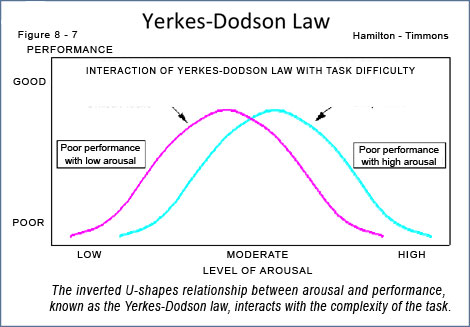
One of the primary characteristics of Flow state (aka the Zone) is that the individual is doing something s/he loves to do, and is immersed fully in the playing of that game as a game, without over-motivation to win or over-concern of failure — and above all that, impregnable by attachments, free. This mood is a clue that you are in the process of moving into higher effectiveness and you just go with the flow enjoying it — and if you don’t distract yourself by subtly gloating over it, you go all the way into the Zone.

If something is bringing you down, that is going to block the Zone. So set aside your work and get yourself somewhere where you are uninterruptible, and see inside yourself to detect where the bad mood or sick feeling might be coming from.

It is likely you are attached to something that you now have fear of not getting. Or you are attached to something not happening that some part of you now expects will be happening anyway. What could it be?

You might find that taking notes helps, especially if you let the pen just write, without editing. This is because different neuron clusters become engaged when you go from just pondering to also writing notes. Shifting modalities like this is like sweeping a searchlight around inside your psyche.

Another way to shift modalities and bring different neurons into play is to turn aside from actively thinking about the question and instead just cultivate emptiness inside while paying sharp attention. This is a powerful shift of neurons, known to other writers. For example, adman James Webb Young’s 1960 classic A Technique For Producing Ideas speaks about a need to set aside all thought about a project after studying and thinking deeply about it, and sure enough flashes of inspiration will appear out of nowhere (usually within three days in this writer’s experience, frequently within hours nowadays after decades of practicing this and other techniques).

The effectiveness of this kind of internal gear shifting is perhaps most commonly observed when we are frustrated trying to think of a word or name. It is on the tip of our tongue and we keep trying the same file drawer in our mind certain that with enough effort we will remember it. But we don’t remember it until we give up and then it easily pops into our head a short while later. This appears to be because we were forcing ourselves into the wrong file drawer and therefore blocking the retrieval.

To recap, we are discussing micro-methodologies to carry out the imperative of not taking foul moods for granted but instead getting to the bottom of the causes, so that action plans can be made that will help to overcome whatever is secretly bothering you. This will also tend to improve your physical health and keep you looking young. However our main goal is to get you out of lower states into the highest performing state Flow state (the Zone) or into the next best thing, the access state right before that, which we call the Observer state. Thus our purpose steadfastly remains to improve the creative effectiveness of our readers thus improving decision making for as many people as possible.

Test this method over the next week or lifetime and see if you don’t agree that it works. There is no downside risk in the lifetime test — it can only help you, or at the worst change nothing.

This has been another installment of our summary release of psychotechnology here at the blog of The Human Effectiveness Institute. We suggest that the condensation of this kind of subtle guidance system is also worth testing by getting our book or video. Another word from our sponsor. 🙂

Let’s review the techniques presented in the last few posts:

  1. Create in yourself and your team a mood of optimization, where that mood has the highest priority over self-aggrandizement or any other more typical mood.
  2. Banish negativity as ineffective time-wasting and rechannel it into a stimulus to discern root sources and then plan / implement effective actions to remove those root causes of the negativity.
  3. Respect yourself and everyone and everything else. Disrespect blocks solutions and creates new problems.
  4. Remain open to the existence of all possibilities where you have not proven — with evidence that would stand up in court and to scientific public scrutiny — that some possibility does not in fact exist.
  5. Do not tolerate bad moods or sickly symptoms in oneself without seeking out the root causes and taking effective action to remove those causes.

These are but a few of the techniques we share in our book and video. Lately people have told me they love the book but their busy lives are spinning out of time control entirely nowadays so the book sits with other books half-finished. My suggestion is to not read the book but just open it at random — especially at times when you do not feel on top of your game. One of the most frequently mentioned ideas in the thousands of endorsement letters and emails we have received from readers is this use of the random pages method. This is the way we suggest circumventing Acceleritis to still get the benefit of our book despite “never having enough time anymore.”

Best to all,

Bill

Re-Imagine Your Life with Fewer Constraints

Featuring two Mind Movies

What if you suddenly had more freedom? You could do whatever you wanted to do. What would you do? Before continuing to read, take a moment and jot down a few quick notes as you ponder this question.

Read on, and you will get one major step closer to that freedom in the next few minutes.

Now, take a look at what you wrote down (or thought about, if you didn’t actually write anything). This is supposedly what you really want out of life.

Is it? Is what you wrote/thought really what would make you the happiest?

If the answer is anything but a resounding YES!, then perhaps you have not been fully honest with yourself in the past, and perhaps your biggest current plans in life are still, deep down, something that you are settling for, because you believe you cannot have what you really want.

What would your ideal life actually be? Drop all constraints in your thinking — the question is not what might be realistic but rather what is the ideal, unconstrained and unrestricted.

Every moment we face choices. When we make these choices it is always in the context of our options. But we don’t consider all of our options. Therefore we make some choices that might be okay but without realizing it we just threw away a choice that could have been superb. A choice we didn’t even know we had.

Why don’t we consider all of our options? Hidden assumptions keep us from even posting those options on the bulletin board of our minds. We don’t have sufficient insight into our own thought process to even suspect that we only consider the options we think might actually be do-able — just a small proportion of our real options.

And by restricting our thinking to what we at the moment think is do-able for us, we are leaving out too much.

First of all we might discover that something has changed so what was unrealistic before is realistic now. But more importantly, unless we start from the ideal, we will never fully understand ourselves and so cannot be creative in bridging the gaps to get to the ideal. Settling for a “good enough” scenario, whether for our lives, or for our company, or for any situation, is not the way to generate creative thinking. The real value of the ideal is that it always generates creative thinking because achieving it seems out of reach.

Creative thinking is valuable because, even if it doesn’t always get you to the ideal, it gets you closer than if you just exclude the ideal from the beginning of your thought process.

We are operating within self-imposed constraints. We have been told so many things are impossible and advised to not aim so high because we will be heartbroken when we fail.

We also live in a reductionist culture that tends to lop off possibilities from our thinking —this would not normally occur to us, because reductionism is so ingrained in all of us. You might have a hunch taking a certain path could get you exactly what you want, but the reductionist culture says hunches are irrelevant, so the hunch gets left out of your set of alternatives. However, your hunch might have been right, and you might have just thrown away your biggest chance in life.

Hunches should not be thrown out. Include them in the list of possibilities you consider when facing an important choice.

From time to time in these postings we bring you summary insight into one new method for optimizing performance for you and your team — bringing you first into the Observer state and then into the Zone. We write these postings in hopes of directly lifting the probabilities that the largest number of people spend as much time as possible in the Observer state and Flow state (the Zone). We hope also to move more people to read our book, which contains much more than summary insight, including detailed instructions for spending more time in the Observer state and Flow state.

Recently we have brought you summary insight into the mood of optimization, negativity controls, and the power of respect. Today we are talking about the power of imagination.

Most of the population most of the time is in a mental state that has all but shut down the imagination. We have dubbed this state EOP, for Emergency Oversimplification Procedure. It’s what happens when there is an information overload. All parts of consciousness are negatively affected, none worse than the imagination.

Relaxation would be most conducive to imagination, but unfortunately Acceleritis — the acceleration of the global information overload — produces stress not relaxation. This robs mental energy needed to propel imagination, limits the perceived time to do something so seemingly impractical as using our imagination, and creates a mood that blocks imagination by focusing on a list of must-do’s under time pressure.

But even worse than any of these limitations, even when we give ourselves time and let our imaginations run free, our imaginations have been constrained for so long by a reductionist culture that we don’t even realize has stunted our assumptions about reality.

We find it hard to imagine things that quantum mechanics has already proven do exist. In our gut, even if we go to church, we may feel strongly that God is just wishful thinking and superstition, yet we may not realize that God could be something different than what religion teaches — something more than what religion teaches. A universe that requires an observer — the universe we live in, according to quantum mechanics and relativity — could have an original observer that came before all other observers. As soon as we realize this, the question of whether in fact God exists becomes a completely different conversation. Who was the original observer?

Our imaginations fail again to keep up with latest science in being unable to conceive of consciousness as just as primary as matter or more so — which is true in the universe we live in, according to quantum mechanics, relativity, string theory, multiverse theory, and the latest scientific findings regarding extrasensory perception.

In a universe in which the observer is mathematically impossible to remove from the scientific picture, all of our materialistic assumptions about our personal identity, the existence of God, whether death is the end of consciousness, become equal to superstition in the degree to which they are unproven and unscientific.

It is time to live life with a conscious awareness that we do not know the truth about any of these subjects — that anything is possible, and our actions second-by-second need to factor in more possibilities than we ever imagined.

The fact that we would like one set of realities more than another does not automatically mean that the one we like is impossible.

Science today is in fact beginning to lean toward hypotheses conjecturing that by liking one reality we help create it. The mind does appear to be able to modify probabilities.

Some of what we think is impossible is probably not impossible. It’s time to loosen the assumption machine up and see how this changes things. It’s time to re-open our minds to the existence of all possibilities — just as science now has.

Stop saying “No” when you imagine possibilities, even if you do this just as an experiment.

Let’s try two experiments right now. We have opened up our minds together. Now without shutting down again let’s co-produce two Mind Movies.

Einstein rocked the world with his mind experiments. We like to use our Mind Movies in much the same way but on a more personal, less cosmological level.

First, the movie of your life. Get comfortable, remove any sense of time pressure, and imagine the rest of your life as a movie playing out from where you are now to where you would love to be. What are the little successes that add up one-by-one to take you to your ideal state?

Jot down a few quick notes of what you discover. Might be a few workable ideas in there that you can turn into reality.

Now, let’s write the movie of the world. Get comfortable again, free yourself of time pressure, and see a movie of how the world moves step-by-step from where it is now to a perpetual paradise — what steps do you see happening in the ideal world?

Jot down some quick notes again.

This exercise can be used when planning for your company. One clue is to look at competitors in terms of what they do best and what your company does best, and see which companies besides yours could continue to thrive by counterspecialization, without limiting your success. What bold or subtle moves could you make that would push the situation so that competitors would get the idea to follow specializations that are different from yours? How could you use coopetition* to bring about a counterspecialized situation that leaves room for more competitors to be successful?

This movie-of-the-ideal-outcome exercise can be applied to interpersonal situations or to pretty much anything. Our ability to stretch our imaginations is surprisingly resilient and can spring back very quickly despite decades of neglect.

All we have to do is let ourselves imagine the ideal.

Here’s a relevant selection from our book Freeing Creative Effectiveness.

Best to all,

Bill

* Coopetition refers to companies that compete finding ways to work together in specific areas.

Creating a Mood of Mental Optimization in Your Organization, with the Power of Respect

The charter of The Human Effectiveness Institute defines our mission as improving decision making. As you delve into our material you discover that it is clarity we aim to engender as the means to improved decisions. A clarity that is lacking due to Acceleritis and EOP.

Distraction is the agency through which Acceleritis diminishes our clarity. The control of distraction both externally and especially internally is the focus of many of our methods. But even when one is paying singlepointed attention/concentration to one thing, the Zone may be elusive.

The Zone block in that case could be motivational. If we are attached to the outcome, feel overmatched, or bored — if these types of feelings are present, they too are distractions, even if we are not consciously aware of them until someone or something brings them to our attention. Our methods are designed to help you notice these subliminal feelings in yourself sooner rather than later, with no need for something external to jog you to realize the presence of such feelings.

Mental optimization is the underlying idea behind Psychotechnology, which is our rubric for any methods that help you work better in the world through clearer decisions. Methods that move you from EOP to Observer state to the Zone.

Mental optimization is a mood — a modality of consciousness that shapes the choices consciousness makes, shapes its information processing priorities, shapes everything that consciousness does. The way large masses with their gravity shape spacetime.

Mood is a supervening variable. It is where consciousness starts out each moment before any thoughts or feelings, memories or sensory percepts, or hunches/intuitions, arise. This is why mood is the shaping governor of which specific thoughts/feelings/percepts/intuitions arise and get your attention.

If you run the show, you can create a mood of mental optimization in your organization. The list of benefits is endless. Everyone will be in a mood of enjoying the game of making everything better, each second, the way a hero/heroine does, without internal pettiness to ruin the perfect pleasure.

Organizations run enormously better this way.

It is like expanding what you do in optimizing a marketing plan (demand), and optimizing the supply chain, and optimizing the balance sheet — applied even more broadly to optimizing the entire operation.

It is also the single best thing you can do to mentor and make good on the promise of nurturing and developing your team members, bringing out the best in each one of them. Showing them the mood, getting them into the ultimate game, where they feel its gamelike fun through and through — this is the basis for which they will continually choose this mood until they wake up every day with it fully operational in their consciousness.

How do you do this? How do you get them into the mood?

It starts with you being in the mental optimization mood. Telling them it’s your new modality. Offering to share it with them. They will ask, “Okay, so what do I do first?”

You’ll tell them the first rule is to assume, as an operating principle regardless of right and wrong, that negativity inside is useless and obstructive to optimization.

You’ll have to give examples and practice this. The best examples will be closest to home. Describe how you did it yourself — something happened recently to the organization and your first feeling was anger at certain people or entities — then you quickly set that aside as not optimal and began your search for problem definitions, opportunities hidden or obvious, and solution oriented win-win action plans, including provision for major refinement based on feedback along the way. Give a few examples of how you turned a challenge into a win for the organization by not wasting time with negativity nor letting it interfere with your ability to conjure a win-win solution.

Obviously you can’t come up with perfect win-win ideas while you want someone to lose because you are mad at them.

You’re even less effective at hurting them when you are sucked into negativity. Not that we espouse hurting anybody as a reasonable goal for an organization. Just pointing out how useless and counterproductive negativity really is.

But, dear reader, I hear you thinking, “Sure, Bill, you already told us about negativity in the last post. What else is there?”

There is respect. Respect is the second principle worth sharing here. Everyone wants it. The thing that usually causes people to quit ultimately comes down to respect. Either they didn’t feel it enough, or the position somehow compromised their internal self-respect, or usually both hand in hand.

Of course most people are in EOP almost all the time, so although their true self wanted respect, the way this manifested was that their ego was wounded and/or they were attached to having their egos flattered. This was coming not from their self that was born, but rather from the software layer functionally called the ego and structurally consisting of neurons built in the brain since birth, which exhibit the robotical behavior that highjacks the mind — this is EOP.

These people could have been kept in the organization by providing them true respect in the right ways and not necessarily by fanning the flames of their ego. What is the right way to show respect? There are many, including:

  1. Not interrupting.
  2. Providing just the right degree of autonomy i.e. not micro managing.
  3. Not utilizing lateral second guessing as a quality control process.
  4. Offering suggestions in the right way i.e. aimed at optimization goals held in common by those in the conversation, and without putting down anyone else’s ideas.

Not an exhaustive list. Let’s delve more deeply into each of these just for clarity.

You should run the meetings you are in either openly or subtly. If it’s someone else’s meeting, be subtle but make sure people are always allowed to finish their thoughts (method 1). Exceptions would be the rare but obvious cases where someone is talking too much and slowing things down. In those cases be careful to use respect and ensure respect from the group to the person who is being longwinded, while keeping things moving. Often the way to do this is to offer an offline meeting with that person at a later time. At that meeting you would employ method 4 above — showing respect in the way that you offer corrective constructive feedback. Your employee will appreciate the feedback if you do it in the right way — the optimization focus with respect — not a put-down.

The optimization mood gives you permission — in fact mandates you — to tell employees the hard truth of what they are doing wrong — but with respect so they can actually appreciate it.

Flashback war story. Hal Miller, my first boss in the media business, was a great mentor and implementer of all these principles. In his training program with two other people at the time we developed full marketing communications plans for a fictitious brand. He had each of us present to him alone in conference room with him pretending to be George Washington Hill, CEO of American Tobacco Company in the 30s and early 40s. Hal’s feet were up on the conference table and there were holes in his socks. He smoked a big cigar and interrupted annoyingly five times on every flipchart.

All of 21 at the time, I was polite at first and gradually became snarky in shooting down his objections one by one by my superior understanding of the technical research underpinning my case.

Later in the hall he came up to me and said “You know you really knew your stuff, and were brave in defending your recommendations,” and at this point he pinched my cheek and looked into my eyes, “but you didn’t make us love you.”  Thus he showed respect for my work while giving me feedback that I was then able to appreciate.

I won’t explain micro managing (method 2) since we all know what it is — giving a person less autonomy than is customary across all industries based on that person’s experience, title, and/or responsibilities.

Method 3 above relates to a subtler form of micro managing, where a boss has one person within the organization systematically second-guessed by peer review, as a matter of course.

All four of these methods are forms of restoring respect that has diminished within an organization as a result of sub-optimal practices slowing things down and leading to sub-optimal decisions as well as to losing employees.

So far in these posts we have covered the first three principles of creating a culture of optimization within your organization:

  1. State the goal of optimizing everything and everyone. Explain it, give personal examples, stay the course over time.
  2. Explain and follow the Negativity Rule. When broken follow the Respect Rule and bring everyone back to optimizing.
  3. Explain and follow the Respect Rule. When broken follow the Respect Rule in bringing it back for everyone, understanding that it is all for optimization.

The optimization mood feels better, and it’s also more fun.

Click here for a relevant sample from our book FREEING CREATIVE EFFECTIVENESS.

Best to all,

Bill

Continuing Praise for David Brooks at ARF, and Holosentience

I’ve long been bemused by the fact that some people really love my book FREEING CREATIVE EFFECTIVENESS, while others seem to stare at it uncomprehendingly, not knowing what category to put it in.

I myself have struggled to put the book in a category since there were no other books in that category. Or, at least, not since the Vedanta Sutra around 200 BC, and not until David Brooks’ THE SOCIAL ANIMAL, which I am now reading. I was drawn in by the uncanny similarities I discerned between our books during the most valuable Keynote I’ve ever heard at a conference — David’s Keynote at the recent Advertising Research Foundation (ARF) Audience Measurement Symposium (AMS) 6.0, the world’s largest annual audience measurement conference.

Now there are two modern books in the category. The category is about looking inside to learn the right adjustments to become a truer you — the you that was born, sans a lifetime of fear-driven conditioning.

David draws his sources from the latest psychology research especially the brain frontier and its integration with classical psychological pattern observations. When I did my first brain experiments within the advertising field and U.S. military in the early 80s, I saw that the mapping of inner/outer experiences to parts of the brain in specific states was going to explode soon. And it has.

Back in the day I had the honor of working with Daniel Goleman and Richard Davidson, former Harvard Psychobiology professors who had been at Harvard with Leary and Alpert. Richie has gone on to lead a large portion of the cutting edge brain research and is highly respected by every brain scientist I’ve met. Dan is best known for his best-selling EMOTIONAL INTELLIGENCE series.

Why don’t I put Dan’s books in the category of looking inside to learn the right adjustments to become a truer you? It’s because I have a larger division in my mind between books that show theory (“descriptive”) versus books that are specifically meant to be used as a manual of techniques (“prescriptive”). I made my manual fun by a sort of neopoetic style and parsing that I find also singles out ideas. David made his book fun by making it a love story. But I feel David’s motivations are similar to mine — a chance to improve everyone’s lives. All they need is equipoise — the ability to objectively look inside and make little acts of will in daring to follow one’s dreams with love and humility.

The two books agree in that. David’s is more descriptive, mine more prescriptive — and still somewhat unique in its emphasis on practical application of very specific techniques that have been proven to work by my own experience, and by a few thousand readers who wrote in to attest to positive results from reading my book.

David cites the actual experiments that are the basis for the way he makes his characters act. Although there is some experimental and fact-based grounding to my book, it exists within a seamless synthesis of brain research with psychoanalysis, 6000 years of inner observation findings and prescriptions summarized in pithy “sutras”, and all the other books I read in the 70s — but mostly from observing my own inner experience for my entire life.

As early as I can remember, I was fascinated more with what went on in my mind and soul than what went on outside. Long before I knew the words, I was often in a state of contemplation, concentration, or meditating. Ideas sprang into my mind that I found myself writing. I was keeping track of my own observations because from what I heard adults saying, it was apparent they would not know what I was talking about.

In my teens I found psychology, esoteric psychology/philosophy, and in my 20s, yoga. I started by trying to put together for myself a science by which I could intelligently predict my own behavior and understand its dynamics, causes and effects.

Soon after college, my career in media research — because it involved computers (in the 60s) — gave me the ability to see the mind through the lens of what computers do. Media research further allowed me to ground my ideas in the stable patterns and slow changes in population behaviors, brain function, attitude shift, cognitive science, and behavioral econometrics, and introduced me to the idea of optimization, which I instantly decided to apply internally.

Out of all of these fuzzy sources comes the theory of Holosentience. It’s amusing that after I thought I had coined this term, I Googled it and found a reference to the light-based doctor in the Star Trek megaseries. He called himself a holosentience, I recall that now. Well, I’m not going to change the name of the theory.

Here is the essence of my theory of Holosentience:

  1. We have a true self that is stitched into the fabric of the Universe. Whatever the Universe is, that’s the same as what the true self is. Our true self is who we are when we were born. It is the root and substrate of our existence, our being, who we are, our true identity, our essence — it is the most real thing about us in the sense of quantum physics reality. We experience it as an observer — it is an observer. It is consciousness, which we define as “that which experiences”.
  2. From pre-birth we begin to program our brain. Every conscious experience creates proteins in the brain — nerve tissue encoded with meanings derived from those experiences. Association areas take form, clusters of related experiences. Programs are written — true software — that inhabit the brain and begin to share control of motor functions with the true self. You do things you seem to not be able to stop yourself from doing. The classical name for this phenomenon is Ego. It is trying to protect you, trying to be helpful like Bill Gates’ Paperclip-being, is still doing things you now have long since forgotten you told it to do, and is in all ways doing what a robot does, acting on its programming. I call this part the software layer or Robot.
  3. Some of this programming needs to be removed, and you have to use what David calls equipoise — objective introspection and small acts of will — to gradually remove it. It does not leave easily. A lot of my book is about how to track down those behaviors and expose them to yourself for what they are. Because there are different centers in this software stemming back to different traumas and extraordinary experiences, in my book I use the term “Senators” to point out that we actually have different selves — although these are not our true self but rather copies of other people who made impressions on our software. David again echoes the idea of not one but many different selves, though he does not point out that they are all within a Robot layer apart from the true self.

There are three broad states of the foregoing Theory of Holosentience, which are not covered in THE SOCIAL ANIMAL:

  1. Emergency Oversimplification Procedure (EOP) — where we are now due to Acceleritis. Acceleritis is not new to today’s obvious-frenetic culture, it actually started 6000 years ago with seeable language. The individual is not processing out the counterproductive programs — that whole part of life is put on hold. There is little if any equipoise. People are not open to objectively considering their own flaws, they are too scared to admit they have any flaws. There is low effectiveness to decision making, action is mistimed, there is little grace and even less inspiration. The world as we see it aggregately — wars, Havenotism, selfish ignoble behavior all around. Creativity is being channeled negatively. In the presence of Weapons of Mass Destruction (WMD) and a deteriorating environment and what appear to be permanent systemic challenges emerging in the economic system, it is quite possibly critical to the human race to get out of EOP asap. I feel that David and I are hoping to make a difference there.
  2. Observer State. There is a detachment of the true self from the software or Robot layer such that there is an arc gap, where the true self is able to objectively see what the software layer is doing. David calls this equipoise. The last great psychologist to urge us to introspect was William James. He was on the right track. Much of the inner work done in the East and in esoteric Western enclaves relates to simple (hah!) deconditioning of the counterproductive programs in the software layer. Decision making in the Observer State is much more effective because of objectivity and truthfulness. Self-protective defensiveness yields to greater clarity. Pragmatism becomes natural and automatic.
  3. Flow State. Instead of detachment of the true self from the software layer, they are a perfectly integrated team. Typically during well-practiced, deeply-known activities, from one’s highest work to sex, from spiritual experience to athletics, the Flow State comes to us as a gift. David calls this Moments of Transcendence and Self Forgetfulness. I understand the Self Forgetfulness part in that there is no subject-object division in Flow State, it is all just doing itself and is of one piece. David uses the word “lost” — “an athlete lost in sport, a believer lost in God’s love, lost in love for one another… the conscious mind disappears.” I would say instead that the chattering mind — part of the software layer — subsides, but that all minds are present (“Holosentience”) during Flow State, they are simply not dwelling on their selfdom in the usual EOP subliminally anxious way. Perhaps David is hewing to his theme of rational versus unconscious — where he is advocating a shift to include the unconscious in a more balanced way, including emotions and values. There are obviously ten places where David and I agree for every one where we might differ. In fact I doubt that we would differ once we mapped our maps together.

For a fun and mind-opening read get THE SOCIAL ANIMAL.

If you like it, try FREEING CREATIVE EFFECTIVENESS next. (After all, it comes with a money-back guarantee. 😀 ) It is also mind-opening and spends more time on the “how to” of it — though as John Ziegler said, “[the book] seems to do it TO you. IT works. YOU don’t.”

Best to all,

Bill