Welcome to this week’s Bill Harvey Blog
Created March 27, 2026
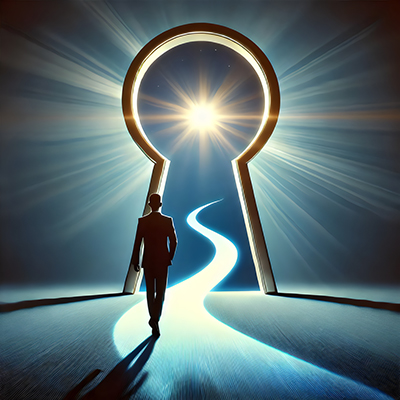
For thousands of years, great spiritual leaders and philosophers have given us all kinds of different answers to this question. And yet, from the beginning of recorded history right up to the present, it is mostly a record of bad behavior.
Why can’t we be good?
Is it because none of these answers is persuasive enough for the average person?
Ancient Eastern Philosophy
- Lao Tzu (Taoism): To align with the Tao (the natural way of the universe). Acting with virtue isn’t about following rules, but about returning to a state of natural balance and simplicity.
- Confucius: To maintain Social Harmony. Being “good” (Ren) fulfills our roles within the family and state, ensuring a stable, functional society through ritual and respect.
- The Buddha: To end Suffering (Dukkha). Ethical conduct (Sila) is a prerequisite for mental clarity; by avoiding harm, we untangle the karmic knots that keep us bound to cycles of pain.
Classical Western Philosophy
- Socrates & Plato: For the Health of the Soul. Just as a diseased body cannot function, an unjust soul is chaotic and miserable. Virtue is the “order” of the soul.
- Aristotle: To achieve Eudaimonia (Flourishing). He argued that being virtuous is the unique “function” of a human; we are only truly happy when we are excellent at being human.
- The Stoics (Marcus Aurelius/Epictetus): Because Virtue is the Only Good. External things (wealth, health) are indifferent; acting with reason and integrity is the only thing truly within our control.
Religious Traditions
- Moses/Jesus/Muhammad (Abrahamic): To Obey and Imitate the Divine. The reasoning is rooted in a covenant: being good is an act of love, justice, and obedience toward a Creator who embodies these traits.
- Krishna (Bhagavad Gita): As Selfless Duty (Dharma). We act righteously not for the “fruits” (rewards) of the action, but because it is our divine duty to maintain the cosmic order.
Enlightenment & Modern Philosophy
- Immanuel Kant: Out of Rational Duty. He proposed the Categorical Imperative: you should act only according to rules that you would want to become universal laws for everyone.
- John Stuart Mill (Utilitarianism): To Minimize Pain and Maximize Pleasure. The reason to be good is simple math: our actions should aim for the greatest happiness for the greatest number of people.
- Friedrich Nietzsche: To Create Meaning. While he critiqued “slave morality,” he believed the “Overman” must create their own virtues to overcome nihilism and say “yes” to life.
Admittedly, all of these notions are obviously “hifalutin” as perceived by the average person. The average person is all wrapped up in having been hypnotized by over-acculturation and is in a state of Emergency Oversimplification Procedure (EOP), especially in our Age of Acceleritis in which information overload has clogged our neurons to the breaking point. Driven like a robot by conditioned reactions, subconscious drivers, and emotional mood swings make the average person go.
All of these ethical ideas are beyond the scope of available cognitive focus. So we would as likely be bad as good in any given moment, were it not for the maturation process that teaches us to try to get along because otherwise life is even more painful.
The rational mind itself cannot cause the individual to choose to be ethical and to then be able to carry that out. Too much of behavior is caused by the subconscious. Years or decades may be spent getting the subconscious to follow the intentions of the rational mind, and most people do not even try.
Why has the world taken a dark turn recently? Why do we now seem to expect and allow and even put on a pedestal, bad behavior?
In my view, it’s the combination of not knowing how to steer the mind and feelings, and the recent contraction of spirituality as a way of life. Even when I was growing up, the adherence to religious codes was very strong compared to the nihilism of the 21st Century.
The greatest times in terms of good behavior were back when spirituality went deep and was felt as being as real as the material world. Now, the people who believe themselves to be the most moral and ethical people cannot see their own bad behavior.
There is no sense of Meaning. Life is perceived to be Meaningless, so naturally, we can do whatever we want.
The virtues which led us for thousands of years have now slipped away into a relativistic grey area, giving us a sense of greater freedom, license to be bad, and there are no hard and fast guardrails. So naturally, those among us who lacked love in their youth would take bad behavior to extremes.
Right around the next corner, quantum physics is going to solve the hard problem of consciousness, and accept what the inventors of quantum physics already knew: the universe IS a Single Consciousness of which each of us is an avatar.
This does not negate biblical history; it explains how all of it can be true.
When this becomes widely known, it will gradually reinstate the perennial ideas about the need to be kind to one another – because we ARE one another.
And because the world has Meaning. One Consciousness is at play, that is the meaning of the universe. We are here to enjoy it and to learn from it. To play nice with each other. All of the reasons given by spiritual leaders and philosophers are right.
My reason to be good is that it makes everything better for me and everyone else.
Being bad is, underneath it all, a way of striking back at a universe that one feels has mistreated you. Actually, you did it to yourself, but most of us do not want to take responsibility for the consequences of our actions; it is part of EOP, and the way you see everyone else acting.
Of all of the spiritual leaders and philosophers discussed above, it is Nietzsche who comes closest to rationalizing the current mode of thinking: we each make up our own Meaning, we each decide what is real Virtue. It has created an era which really fits what Hobbes thought of the human race.
Hobbes argued that without a central authority or moral rules, humans live in a “State of Nature.” In this state, everyone has a right to everything, leading to a “war of all against all.” He famously described life here as:
“…solitary, poor, nasty, brutish, and short.” He felt that a strong leader would be the solution, forcing people to follow the rules or else. History has proven him wrong about this last bit. The Leviathan leaders have made things more like what Hobbes saw as the state of nature. Lao Tzu was closer to the mark on seeing the state of nature as idyllic.
To answer the question posed at the beginning of this article, we benefit by following the good path, and we benefit others by it.
By living a virtuous life of kindness to others, we tap into the love that is all around us and add to it, a truly spiritual feeling, and one that has meaning for everyone.
Love to all,
My new book POWERFUL MIND has some great reviews
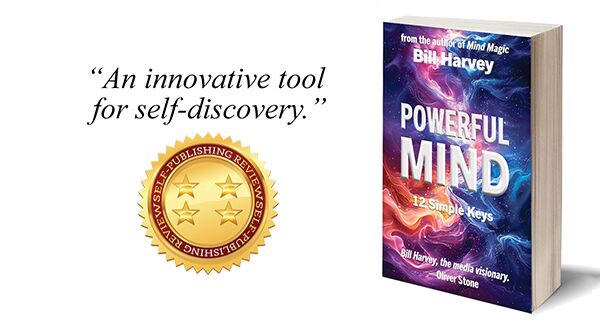
“A compelling, optimistic, and original approach to mental focus, Powerful Mind is an innovative tool for self-discovery and creative liberation. Succinctly outlined and intuitively structured, this book is replete with rational advice, using a radical but commonsense approach. It takes a rare and adroit thinker to incorporate myriad worldviews and welcome diverse readers, regardless of ideological allegiance, but Harvey shows himself to be precisely that. The book is a masterfully structured, intellectually affirming, and potentially paradigm-shifting read.”
~ Self-Publishing Review, ★★★★